Ice Cave Season in Iceland 2026-2027: The Best Months to Go
Natural blue ice caves are a winter-only window. Here is when it opens, why, and how it lines up with the aurora and the glacier lagoon.
 Written with Björn Einarsson, Iceland South Coast & glacier-lagoon tour guide and local specialist
Short answer
Iceland's natural blue ice caves under Vatnajökull are safe to visit roughly November through March. Summer meltwater carves them out; the winter freeze then stabilizes the ice enough to go inside. The Katla cave near Vík is the exception and runs closer to year-round. Always a certified guide, never alone.
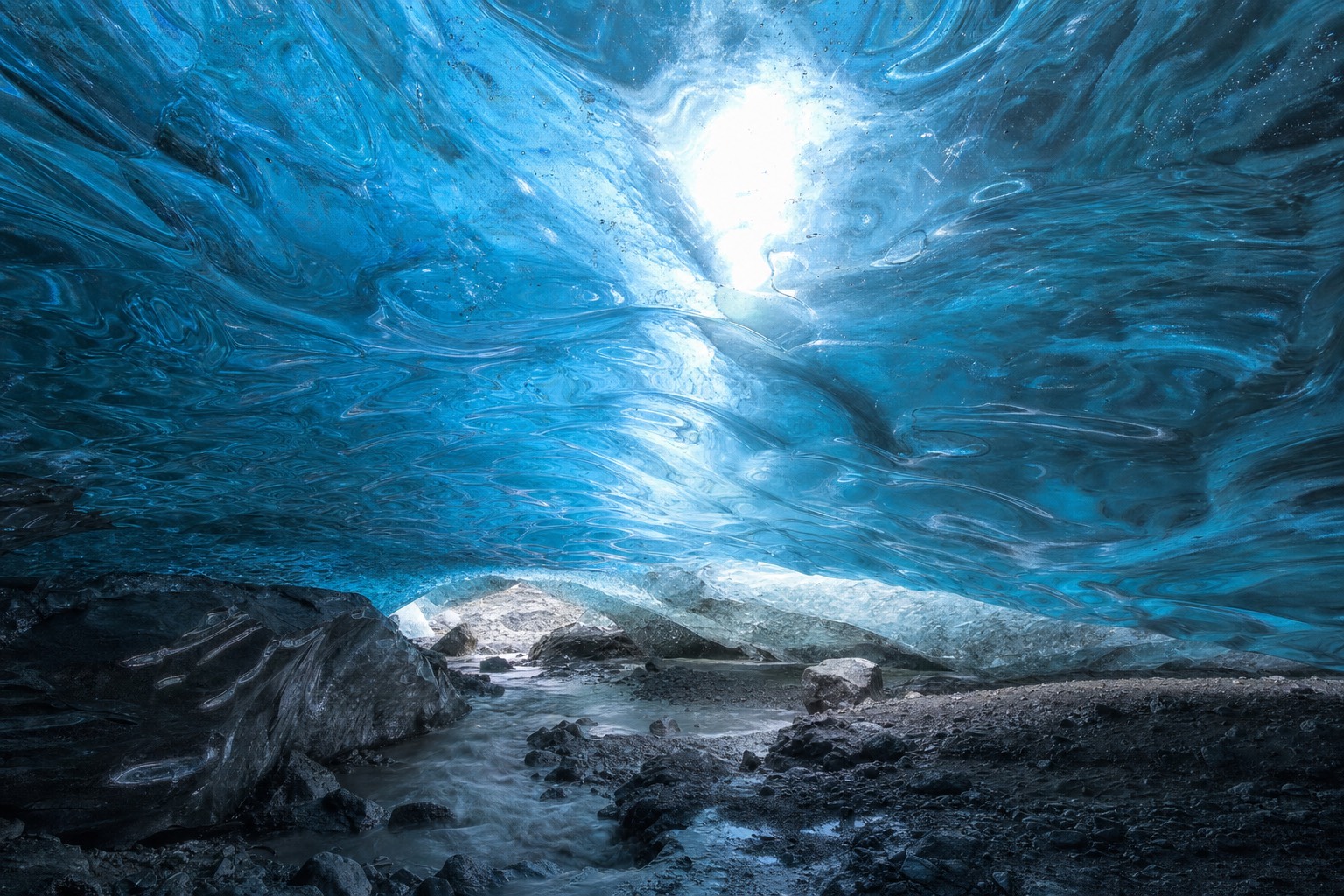
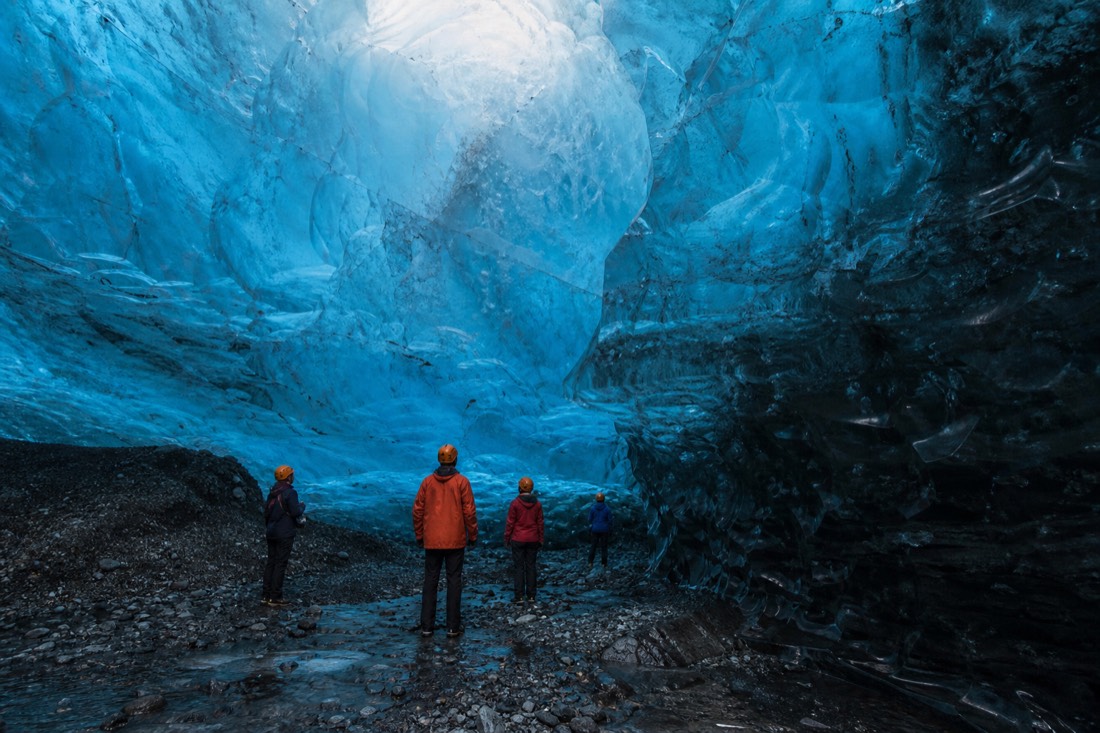
The first time you crouch through the mouth of a real ice cave, your eyes take a second to adjust, and then the ceiling turns on. Blue, everywhere, a deep filtered blue that no photograph quite carries. I have taken visitors down onto the ice at the edge of Vatnajökull in the depths of winter, boots crunching over frozen meltwater, and the question that comes up before we even reach the glacier is always the same: when can you actually do this? The honest answer is that the natural blue caves are a narrow seasonal thing, and getting the timing right is most of the battle.
When is ice cave season in Iceland?
Iceland's natural blue ice caves are open to visitors roughly from November to March. That window is set by the weather, not by operators. The glacier has to freeze hard enough that the caves stop melting and flooding before a certified guide will take anyone inside. Outside that stretch, the natural caves are unsafe and closed.
If your trip lands in that November-to-March window, remember that the exact route and blue-ice formation depend on what the guide finds safe that day.
The caves people picture, the glassy blue chambers under Vatnajökull, form inside Europe's largest ice cap. Vatnajökull is the biggest glacier in Iceland by a wide margin and one of the largest in Europe by volume, and its meltwater is what does the sculpting. That is the part most first-timers get backwards. The caves are not frozen into being by winter; they are melted out in summer, then locked into a safe state by the cold.
So the season is really a truce between those two forces. From roughly November, the surface melt slows and the running water inside the ice drops away. The structure settles. By March the balance tips back and the whole thing becomes a moving target again. If you want the fuller decision on whether the trip earns its place in a winter itinerary at all, my take on whether the ice cave in Iceland is worth it walks through that honestly.
Why do natural ice caves only open in winter?
Because a natural ice cave is a summer meltwater channel that has to refreeze before it is safe. Warm-season melt carves the tunnels through the glacier. When autumn cold shuts that water flow off, the ice hardens and stabilizes, which is what lets a guide bring people in. Spring warmth reverses it: meltwater returns, floods the floor, and raises collapse risk.
I read the glacier partly by how much water I can hear. In shoulder season you sometimes still catch it, a faint rush somewhere under the ice, and that sound is the reason a good guide will turn a group around. Water inside a cave means the cave is still working, still shifting, and a shifting cave is not one you walk into.
The freeze does two useful things at once. It stops the flooding, and it strengthens the ice so the ceiling holds. That is why the opening date moves year to year rather than landing on a fixed calendar day. A cold, early winter can bring the caves into play sooner; a mild one pushes everything back. Iceland's official park authority for the glacier, Vatnajökull National Park, is the sensible place to sanity-check conditions and access before you lock in a date, because the ice does not read tour brochures.
There is a hard safety line under all of this. Natural ice caves are entered only with a certified guide who has scouted the specific cave that week, carrying a helmet and crampons, and never alone. safetravel.is is blunt about it, and so am I. People have died walking onto glaciers unguided. This is not the corner to cut.
What are the ice cave conditions month by month?
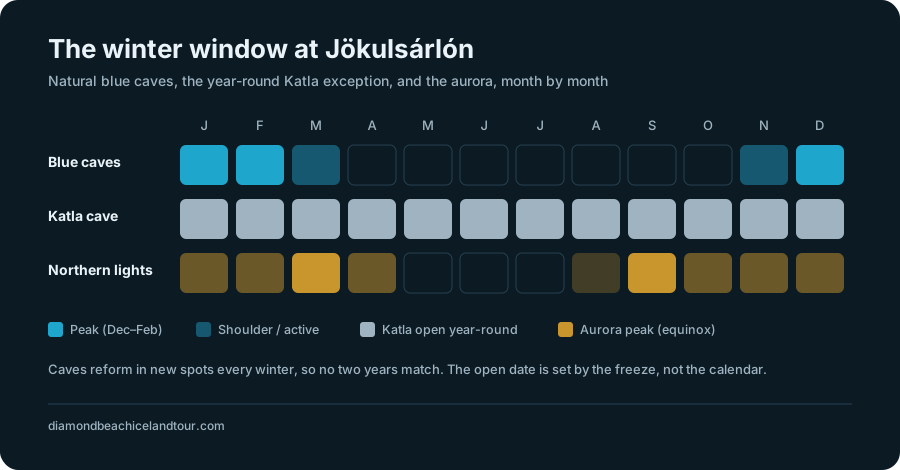
November eases the season open as the first caves firm up, though early winter can still surprise you with water. December through February is the reliable core: coldest air, bluest ice, most stable ceilings, and the longest choice of caves. March is the graceful exit, still good but increasingly weather-dependent as the melt creeps back in.
No two winters run identically, which is worth saying before you read any grid as gospel. Guides re-scout constantly, because the caves themselves reform in new places and new shapes every single year. The cave you saw in a photo last February may not exist this year, and a better one may have opened a valley over.
Here is the shape of a typical season for the natural Vatnajökull caves, with the usual caveat that a cold snap or a thaw can shift any of it.
| Month | Natural blue caves (Vatnajökull) | Typical ice conditions | Notes |
|---|---|---|---|
| October | Mostly closed | Meltwater still active | Too warm and wet to be safe |
| November | Opening | Firming up, some water early | First caves come online, choice limited |
| December | Open | Cold, ice stabilizing | Short daylight, strong blue in low sun |
| January | Open, peak | Coldest, most stable | Widest choice of caves, deepest blue |
| February | Open, peak | Cold and solid | Reliable, often the sweet spot |
| March | Open, winding down | Milder, melt returning | Still good, more weather cancellations |
| April to September | Closed | Active melt, flooding | Natural caves unsafe; look at Katla instead |
Which ice caves are open outside the core season?
The Katla ice cave under Mýrdalsjökull, near Vík, is the big exception. Operators run it much closer to year-round, including summer, because of how that particular glacier and its cave sit. It is a different animal from the Vatnajökull crystal caves: a black-and-blue cave streaked with volcanic ash rather than the pure blue crystal look, and it makes the ice caves viable even in July.
This is the fact that saves a lot of summer trips. If you are in Iceland in June and desperate to get inside a glacier, the pure blue caves at Vatnajökull are shut, but Katla is usually on. It sits under Mýrdalsjökull, the ice cap that caps the Katla volcano, and the dark ash layers running through its ice tell the story of past eruptions. It photographs moody rather than jewel-like, which some people actually prefer.
The trade-off is character. The Vatnajökull caves in deep winter are the ones that give you that unreal sapphire glow; Katla gives you access and drama in the ash bands. Neither is the featured day trip on this site, and neither is near it geographically in the way the lagoon is. For a like-for-like on the different products and operators, see my breakdown of which ice cave tour is best in Iceland.
| Cave type | Glacier | Season open | Ice character |
|---|---|---|---|
| Blue crystal caves | Vatnajökull | November to March | Pure, deep blue, glassy |
| Katla ice cave | Mýrdalsjökull | Roughly year-round | Black ash bands with blue ice |
| Sapphire / Crystal caves | Vatnajökull | Peak winter, Dec to Feb | Most vivid blue when cold holds |
| Man-made ice tunnel | Langjökull | Year-round | Carved tunnel, not a natural cave |
How does ice cave season line up with the aurora and the lagoon?
Beautifully, as it happens. The natural cave window from November to March sits right inside the northern lights season, which runs roughly late August to late April. Jökulsárlón Glacier Lagoon and Diamond Beach are open all year, and winter is when they overlap with both the caves and the aurora. One winter trip to the south-east can, with luck and clear skies, land all three.
That overlap is the real planning insight. You do not choose between ice caves and the lagoon in winter; they are neighbours, both feeding off the same Vatnajökull ice. The caves are reached from the same corner of the country you cross to reach the glacier lagoon, and the aurora hangs over the whole region on a clear, dark night. What you cannot promise is the sky. The northern lights need clear conditions and a bit of solar luck, and the place to check that honestly is the aurora forecast from Iceland's Met Office at en.vedur.is, not a tour company's optimism.
There is a genuine honesty note to draw here, because it trips people up. The site's featured day tour is a lagoon-and-beach trip, not an ice cave tour. It views Jökulsárlón and Diamond Beach; it does not go inside a glacier. Ice caves are a separate, certified glacier product you book on their own. If your winter goal is the lagoon under low golden light with an aurora chance after dark, book the guided Jökulsárlón & Diamond Beach day trip and check live availability and prices on GetYourGuide, then add a dedicated ice cave tour as a second, separate outing. For the aurora side specifically, my guide to the northern lights at Jökulsárlón and Diamond Beach covers where and when to look.
Here is how the three winter draws stack up across the year, so you can see where they overlap.
| Winter draw | Best window | Peak | Notes |
|---|---|---|---|
| Natural blue ice caves | November to March | December to February | Certified guide only, weather-dependent |
| Katla ice cave | Year-round | Any month | Ash-streaked, viable in summer too |
| Northern lights | Late Aug to late April | September to March | Needs clear, dark skies |
| Jökulsárlón + Diamond Beach | All year | Winter for the overlap | Long day from Reykjavík, about 14 hours |
| Lagoon boat cruise | April to October | Summer | Seasonal, not a winter option |
So when should you actually go?
For the pure blue crystal caves, aim for January or February. That is when the ice is coldest, the ceilings are most stable, the blue is deepest, and you still get long enough guided windows in the short daylight. It is also prime aurora and prime lagoon-in-winter season, which makes it the single best month range if the caves are your reason for coming.
If your dates are fixed for summer, do not despair and do not force a closed cave. Point yourself at Katla instead, accept the ash-banded look, and know you are still getting inside a glacier legitimately. And if you are torn between chasing caves and simply seeing the lagoon at its winter best, remember the two sit side by side, so a well-planned few days in the south-east can cover both.
The one thing I would not do is gamble on the shoulder weeks without a backup. Book early-November or late-March caves and you are betting on the freeze arriving on schedule or the thaw holding off, and the glacier does not owe you either. Give yourself a spare day, watch the forecast, and let a certified guide make the call on the ice. That is how you come home with the blue ceiling in your photos instead of a cancellation email.
Your Next Step
Choose by season and starting point
Initial editorial suggestion. Confirm your date and party requirements with the operator.
Have your travel month and Iceland base in mind? Check the matching guided ice experience before arranging the rest of your glacier day.
Ages 10+. A cave is not guaranteed: the route may visit a blue-ice canyon, tunnel or other feature. Requires general fitness and uneven-ground walking; not suitable for mobility impairments.
Refine Your Choice And View Alternatives
Jökulsárlón: The Original Ice Cave Tour on Vatnajökull
Around 2.5–4 hours from Jökulsárlón, with an English-speaking glacier guide, modified 4x4 transport and safety equipment.
This tool compares tour formats, meeting points, listed ages, seasonal windows and duration. Seasonal guidance is not live availability. It does not confirm availability or personal suitability. Local activities do not include the drive from Reykjavík; leave extra time for travel and check-in.
From Vik: Katla Ice Cave and Super Jeep Tour: A Super Jeep outing from Vík with a guided Katla cave visit, crampons and helmet. Select the Vík departure option. Ages 6+. Cave appearance changes. Confirm the chosen option’s duration and language before booking; Reykjavík departures are a different option.
From Húsafell: Into the Glacier Ice Cave Adventure: A guided trip from Húsafell into the engineered Langjökull ice tunnel, with glacier truck transport and supplied equipment. A man-made tunnel, not a natural cave. All ages with an adult; not suitable for mobility impairments. Confirm departure duration and guide language for your option.