Is Diamond Beach in Iceland Worth It?
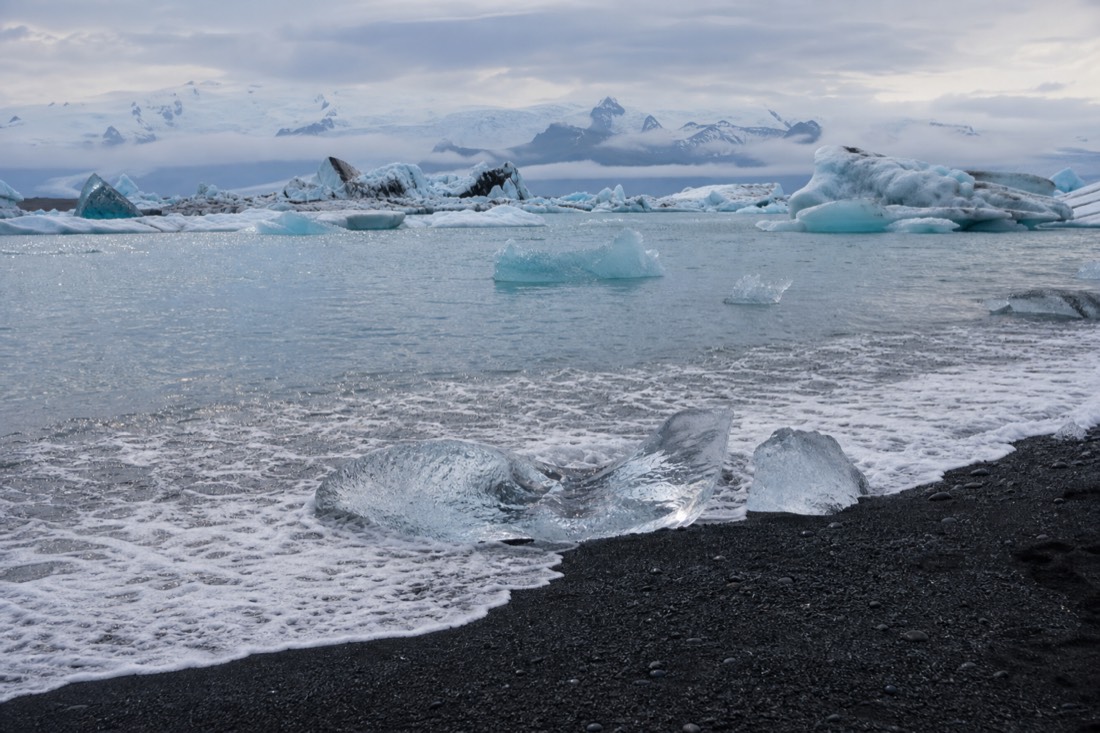
Ice the colour of glass on jet-black sand, restacked by the sea every few hours. The catch is how far away it sits.
 Written with Björn Einarsson, Iceland South Coast & glacier-lagoon tour guide and local specialist
Short answer
For most first-time visitors, yes. Diamond Beach delivers a genuinely rare sight: ancient glacier ice scattered across black volcanic sand, changing by the hour. The one honest caveat is distance. It is roughly 380 km and a 14-hour round day from Reykjavík, so plan the whole day around it.
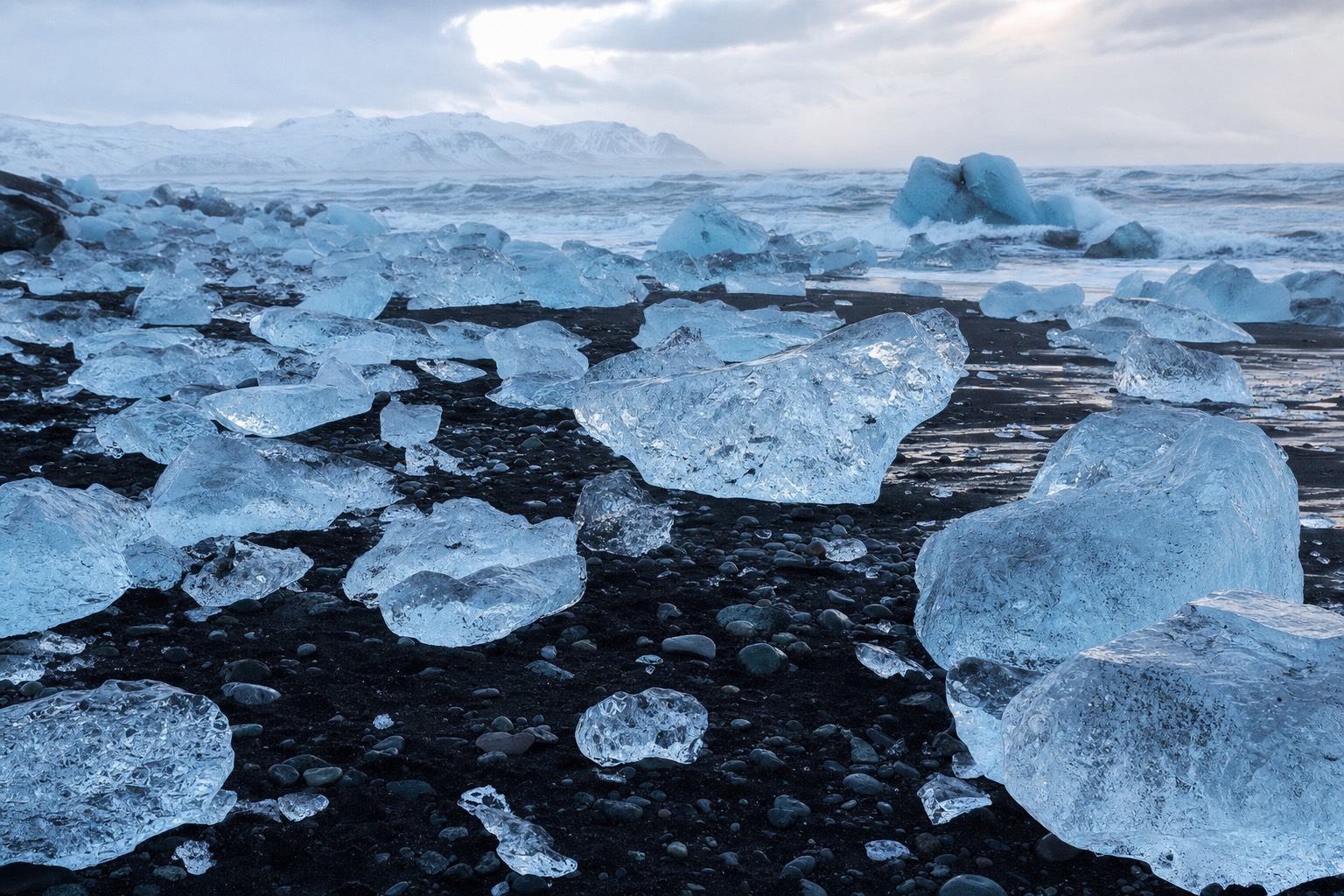
Ice does not usually shine. On this stretch of black sand it does, because the chunks that wash up here are dense, old glacier ice that catches the low Icelandic light and throws it back at you like polished glass. I have stood on this beach in a July drizzle and again in a January wind that pushed sea spray sideways, and both times the ground was doing something I have never seen anywhere else in the country. That is the pull of the place. The honest question is whether that pull survives a very long day in a coach seat, and my answer is a qualified yes.
Is Diamond Beach in Iceland actually worth it?
Yes, for most first-time visitors it is genuinely worth it. Few places put centuries-old glacier ice directly onto a black volcanic beach, restacked by the tide every few hours. The single real caveat is the distance: about 380 km and a 14-hour round trip from Reykjavík, so treat it as a full-day commitment, not a quick stop.
I want to be straight about what tips it from "nice" to "worth it." It is the combination. You get the lagoon, Jökulsárlón, sitting quietly with icebergs drifting toward the sea, and then a two-minute walk across the road drops those same bergs onto the sand as broken diamonds. One feeds the other. If the beach were an isolated attraction you drove five hours to see on its own, I would hesitate. Paired with the lagoon, and usually with Seljalandsfoss and the coastline at Vík along the way, the day earns its length.
The other thing that makes it land is that it is never the same twice. The ice arrives, melts, refreezes into new shapes, gets dragged back out and replaced. I have talked to travellers who came expecting a postcard and left more struck by how alive and temporary the scene felt. That said, "worth it" is not universal, and later on I break down exactly who should think twice.
What do you actually see at Diamond Beach?
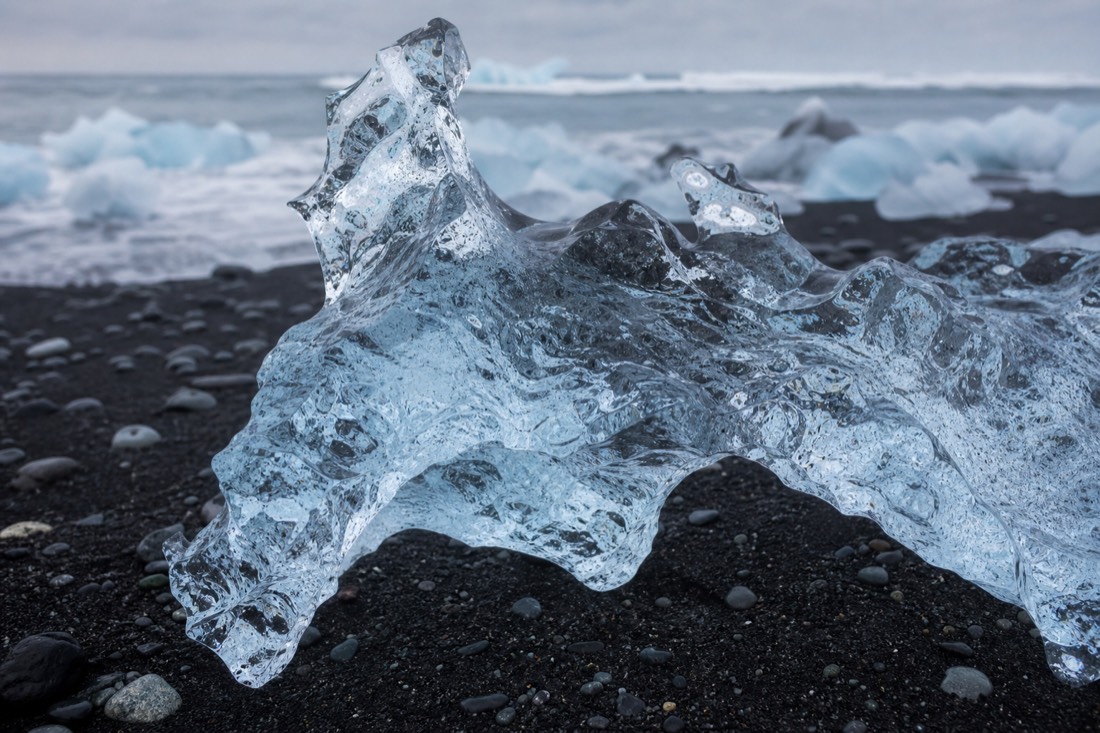
You see broken glacier ice scattered across dark volcanic sand, ranging from fist-sized to boulder-sized. The pieces are clear, milky white, deep blue, or streaked with black volcanic ash, and the arrangement shifts every few hours as tides pull ice out and push new bergs in. Some of it looks lit from within.
That ice has a real backstory, and it changes how you look at it. These chunks calve off Breiðamerkurjökull, an outlet tongue of Vatnajökull, Europe's largest ice cap. The ice can be centuries old, some of it reckoned at close to a thousand years, compressed so tightly that air bubbles are squeezed out and it turns that unnatural clear blue. When you pick up a piece and it feels heavier and glassier than normal ice, that is why.
The black stripes catch people off guard. Those are layers of volcanic ash from old eruptions, frozen into the glacier centuries ago and only now surfacing on the sand. So a single stranded berg can hold clear ice, blue ice, and a dark ribbon of Icelandic geology all at once. Against black sand, in flat grey light, the contrast does most of the photographic work for you.
Is the ice different in summer versus winter?
Yes, noticeably. Summer usually means more melt, smaller stranded pieces, long daylight, and heavy midday crowds. The colder November-to-March stretch often brings more calving and bigger, fresher ice, plus a real northern-lights chance after dark, at the cost of short days and possible weather disruption on the drive.
There is a myth that the beach is always carpeted in ice. It is not. On a run of very cold, calm days with little calving, the sand can look almost bare, and then the tide turns and fresh bergs arrive within hours. I have watched an empty-looking beach fill up over a single afternoon. If you get an off moment, wait or double back after the lagoon; the scene rarely stays still for long.
Season shapes the whole experience, not just the ice. Here is how the year tends to run.
| Season | Ice on the sand | How the bergs look | Crowds | Daylight | Aurora chance |
|---|---|---|---|---|---|
| Spring (Apr–May) | Moderate, variable | Clear and blue, mid-size | Building | Long, lengthening | Fading |
| Summer (Jun–Aug) | Often smaller, more melt | Bright, glassy, quick to shrink | Heaviest at midday | Near round-the-clock | None (too bright) |
| Autumn (Sep–Oct) | Growing again | Fresh, varied colours | Easing | Balanced | Returning |
| Winter (Nov–Mar) | Often biggest and freshest | Dense blue, dramatic | Lightest | Very short | Best, weather permitting |
For photographers, winter and the shoulder months are the sweet spot: bigger ice, softer light, thinner crowds. For sheer ease of travel, late spring and early autumn balance decent ice against manageable daylight and drivable roads.
Is Diamond Beach worth the long day trip from Reykjavík?
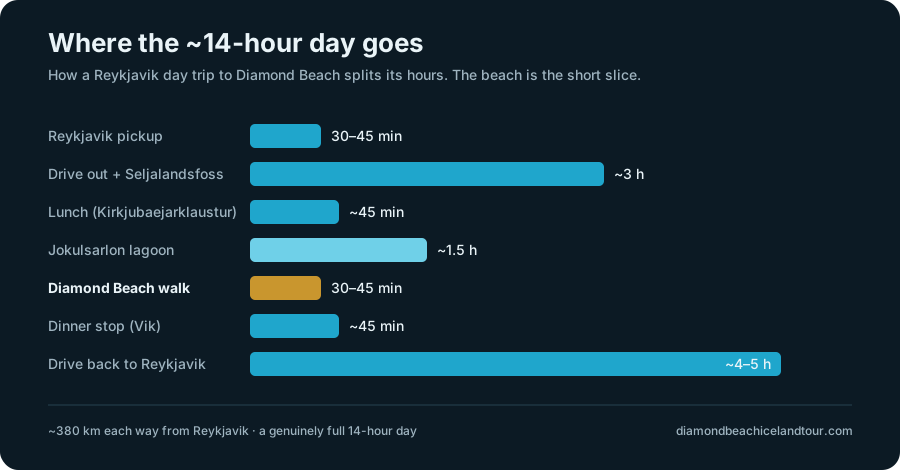
This is the crux. Diamond Beach sits about 380 km east of Reykjavík, roughly five to six hours of driving each way, so a day trip runs close to 14 hours door to door. If you accept that the drive itself, past waterfalls, black coast, and the glacier lagoon, is part of the payoff, it is worth it. If you only want the beach, it is a lot.
Be honest with yourself about your appetite for a coach seat. The upside of going guided is real, especially in winter: someone else handles a long Route 1 drive in conditions that can turn icy and dark, and you get commentary and comfort stops instead of white-knuckle self-driving. The downside is the same for everyone. It is a long time out, and the actual beach visit is a slice of it.
Here is roughly where the hours go on the full-day coach trip.
| Segment of the day | Rough time | What happens |
|---|---|---|
| Reykjavík pickup | 30–45 min | Hotel and bus-stop pickups around the city |
| Drive east + Seljalandsfoss | ~3 hr | South Coast scenery, photo stop at the waterfall |
| Lunch stop (Kirkjubæjarklaustur) | ~45 min | Break and food on the way |
| Jökulsárlón lagoon | ~1.5 hr | Icebergs, optional boat cruise (Apr–Oct) |
| Diamond Beach walk | ~30–45 min | The ice on the black sand |
| Dinner stop (Vík) | ~45 min | Meal break on the return |
| Drive back to Reykjavík | ~4–5 hr | Long evening haul, aurora chance in winter |
| Total | ~14 hr | A genuinely full day |
If that shape works for you, this is the trip I would point you to: book the guided Jökulsárlón & Diamond Beach day trip and check live availability and prices on GetYourGuide. It runs as a coach tour with a live English-speaking guide and onboard WiFi. Pickup depends on the option selected, and the seasonal Jökulsárlón boat ride is an optional extra when conditions allow. I go deeper on the endurance question in my honest read on whether the long day to Jökulsárlón is worth it.
Who should visit Diamond Beach, and who should skip it?
Go if you are a first-time visitor with a full day free, a photographer, or anyone who wants Iceland's signature glacier scenery. Think twice if you are on a tight two-to-three-day trip, travelling with restless young children who struggle with long drives, or you get carsick on winding coastal roads. The beach rewards people who have the time to spend on it.
The traveller type matters more than most guides admit, so here is my blunt breakdown.
| Traveller | Worth it? | The honest reason |
|---|---|---|
| First-time Iceland visitor | Strongly yes | It is the country's standout natural sight |
| Keen photographer | Strongly yes | Nothing else composes itself like this |
| Family with young kids | With planning | The ice thrills them; the 14-hour day may not |
| Nervous winter self-driver | Yes, but go guided | Skip the icy Route 1 drive, keep the payoff |
| Traveller on a 2–3 day trip | Often no | The day eats most of your limited time |
| Repeat visitor who has seen it | Optional | Go for a different season, not a repeat |
If you land in the "think twice" column, you have honest alternatives. You can save it for a longer future trip, base yourself closer to the lagoon so the drive shrinks, or read up on how long you actually need at Jökulsárlón before you commit a whole day. And if timing is your real question, my guide to the best time to visit Diamond Beach walks through the season trade-offs in detail.
Is Diamond Beach safe to visit?
It is safe if you respect the water. The main hazards are sneaker waves and strong rip currents that can pull people off the sand without warning, plus dangerously cold glacial water. Keep well back from the surf, never turn your back on the sea, and do not climb on beached icebergs, which can roll or shift with no warning.
I cannot say this plainly enough, because the beach looks calmer than it is. Waves here arrive in irregular sets, and a much larger one can surge far up the sand while you are lined up for a photo. People lose shoes, tripods, and occasionally their footing. The official guidance from Iceland's safetravel.is is to keep a wide margin from the waterline and watch the sea at all times. Treat that as a firm rule, not a suggestion.
The icebergs are the second trap. A stranded berg looks solid and photogenic, so people climb on for a picture. They are unstable, top-heavy, and slick, and they can roll into the freezing water in a second. Admire them from the sand. If you want the geology and formation story behind the lagoon that feeds this beach, the Jökulsárlón overview on Wikipedia is a solid primer on the deepest lake in Iceland, at roughly 284 metres, which has quadrupled in size since the 1970s as the glacier retreats.
What does an hour at Diamond Beach actually look like?
On the guided day trip you get roughly 30 to 45 minutes on the sand, walked over from the lagoon across the road. That is enough to reach the waterline, read a few wave sets, photograph the biggest stranded bergs, and feel the cold. It is not enough to wait out a bare-ice lull, so move with a plan.
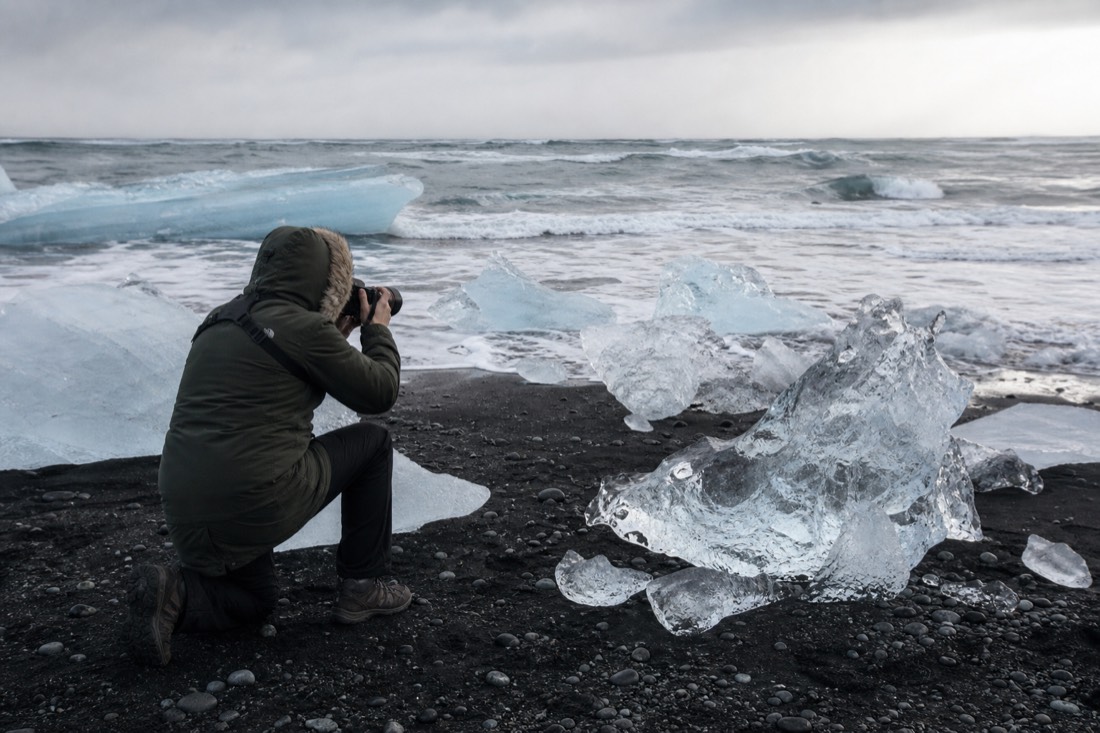
I always tell people the beach visit is short, so treat it like a fast, deliberate loop rather than a wander. You step off the coach, cross from Jökulsárlón, and the sand opens in front of you with ice scattered wherever the last tide left it. The instinct is to sprint to the nearest big berg. The better move is to stop, watch two or three wave sets first, and see how far up the sand the water is actually reaching before you commit to a spot.
Here is how I'd spend a typical 40 minutes down there.
| Time on the sand | What to do | Why it matters |
|---|---|---|
| First 5 min | Walk to a safe line, watch two wave sets | You learn the water's real reach before you settle |
| 5–15 min | Shoot the largest bergs from the dry sand side | Best light and shape, no soaked feet |
| 15–28 min | Move along the beach for fresh compositions | The ice changes every dozen metres |
| 28–36 min | Warm your hands, grab wide shots | Cold fingers end more photos than bad light |
| Last 4 min | Walk back to the coach | Guided groups leave on time, not on your shot |
None of that is rigid. If the tide is dumping fresh ice while you're there, ditch the plan and shoot the action. The point is that the clock is real on a coach trip, and the people who drift back to the bus with regrets are usually the ones who spent the first fifteen minutes deciding where to start.
What should you bring to Diamond Beach?
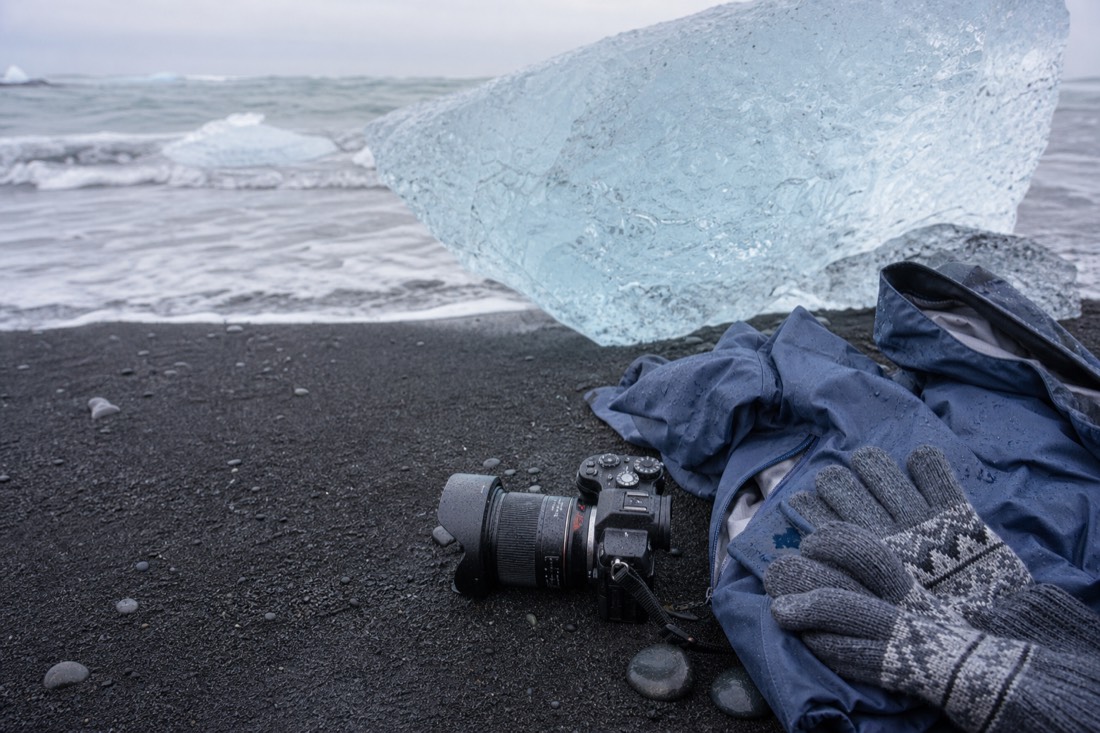
Waterproof boots, a windproof and waterproof outer layer, warm gloves, and a hat, in every season. The wind off the water is cold even in July, and sea spray soaks anyone who stands too close. Add grippy soles for wet sand, and a lens cloth if you shoot, because spray and drizzle coat glass in minutes.
The mistake is dressing for the forecast in Reykjavík instead of the coast at the lagoon. Conditions on the south-east shore run colder and wetter than the city, and the beach has no shelter at all. Even in summer daylight the wind carries a bite, and in the November-to-March window you are dressing for genuine cold on top of a long day in and out of a coach.
Treat this as a planning checklist, not a hard packing list from the operator.
| What | Bring | Note |
|---|---|---|
| Outer layer | Windproof and waterproof jacket | Non-negotiable year-round; spray reaches surprisingly far |
| Legs | Waterproof trousers in winter, quick-dry in summer | Wet sand and spray soak jeans fast |
| Feet | Waterproof boots with grip | The sand is wet and shifting near the water |
| Hands and head | Warm gloves and a hat | Cold hands cut a short visit even shorter |
| Camera | Cloth, spare battery, maybe a small tripod | Cold drains batteries; spray fogs lenses |
| Extras | Snacks, water, any regular medication | Stops are spaced hours apart on the drive |
If you are self-driving instead of taking the coach, add the practical stuff the guide would otherwise handle: a full tank before the last leg, and a card for the roughly 1,110 ISK parking fee at the Jökulsárlón lot across the road. On the guided trip, transport and timing are someone else's problem, which is a real part of what you are paying for.
What mistakes do visitors make at Diamond Beach?
The three I see most: standing too close to the surf for a photo, giving up when the sand looks bare, and climbing onto a beached iceberg. All three are avoidable. Keep a wide margin from the water, wait or double back for fresh ice, and shoot the bergs from the sand rather than clambering on top of them.
I have guided this coast since 2022, and in that time I have taken well over a thousand travellers along the South Coast and out to the glacier lagoon. The same few errors come up again and again, and none of them are about the beach being disappointing. They are about people fighting the place instead of reading it.
The close-to-the-water one is the dangerous mistake, so I say it first and loudest. Visitors line up a shot with their back to the sea, and a bigger wave in the set surges up the sand while they are looking through the viewfinder. Best case, wet boots. Worst case, someone gets pulled off their feet by water cold enough to sap strength in seconds. The waterline is not where you stand for the photo.
The bare-sand mistake costs people the whole point of the trip. They arrive on a quiet ice moment, decide the beach is a bust, and wander back early. The display resets with the tide, sometimes within an afternoon, so the fix is patience and a second look after the lagoon rather than an early retreat.
| Do | Don't |
|---|---|
| Keep a wide, dry-sand margin from the surf | Turn your back on the sea for a photo |
| Wait or double back if the sand looks bare | Write the beach off in the first ten minutes |
| Photograph bergs from solid ground | Climb or lean on a stranded iceberg |
| Watch your kids and your gear near the water | Chase a shoe or tripod into the waves |
The iceberg climbing is the one that makes me wince as a guide. A stranded berg looks like a solid white boulder, so someone scrambles up for a picture. It is slick, top-heavy, and can roll into freezing water without warning. Admire them from the sand. No photograph is worth what happens if one shifts under you.
How does Diamond Beach compare to Iceland's other ice stops?
Diamond Beach is the only place that puts glacier ice on a black beach, and it comes free with a visit to the lagoon across the road, so on a single day it is unbeatable value for effort. Ice-cave tours go deeper into the blue ice but run winter-only and cost more time and money. Basing nearer the lagoon buys you more beach and less coach.
If you are weighing where your ice-and-glacier hours are best spent, it helps to see the options side by side. The honest headline is that Diamond Beach and Jökulsárlón are effectively one stop, two views, which is exactly why the long day works. You are not choosing between them.
| Option | What you get | Effort from Reykjavík | My verdict |
|---|---|---|---|
| Diamond Beach | Glacier ice on black sand, resetting with the tide | Same 14-hour day as the lagoon | Do it once, ideally in winter light |
| Jökulsárlón lagoon | Icebergs on water, optional boat cruise (Apr–Oct) | The same trip, across the road | Automatic pairing, no extra travel |
| Winter ice cave | Inside real blue glacier ice, guide required | Separate tour, Nov–Mar only | Add it if you have a second day |
| Basing in Höfn | Shorter drive, dawn and dusk beach visits | Höfn sits roughly 80 km east | Best for slower, multi-day itineraries |
The comparison that matters most is against your own itinerary, not against another attraction. A traveller with a week can pair the day trip with a separate winter ice-cave tour and see the ice from every angle. Someone based in Höfn for a night can walk the beach at dawn with almost nobody around. And a visitor on a tight schedule gets the whole thing, lagoon and beach, in one guided day without touching the wheel. That flexibility, more than any single view, is why I keep sending people east.
So, is Diamond Beach worth it, honestly?
For the great majority of visitors, yes. The sight is rare, the ice is ancient, and the scene never repeats, which is exactly why it stays with people. The only reason to skip it is time: on a very short Iceland trip, a 14-hour day may cost more than it gives. If you can spare the day, spend it here.
My real-world verdict, as someone who guides this coast, is that the people who regret the day are almost always the ones who underestimated its length, not the beach itself. Nobody stands on that black sand watching blue ice glow and thinks it was a waste. They think about the drive home. So go in with clear eyes about the hours, let a guided coach carry the long haul, and let the beach do what it does. That is the honest trade, and for most travellers it is a good one.
Your Next Step
Choose Your South Coast Or Lagoon Ice Day
Initial editorial suggestion. Confirm your date and party requirements with the operator.
Have a travel date in mind? Check the Reykjavík departure and pickup option before arranging the rest of your South Coast itinerary.
Ages 6+. Allow for delays. Meals are extra; glacier hiking and ice-cave visits are separate experiences.
Refine Your Choice And View Alternatives
Reykjavik: Jokulsarlon Glacier Lagoon & Diamond Beach Tour
14-hour coach trip from Reykjavík with an English-speaking guide, Jökulsárlón and Diamond Beach stops. Pickup and the seasonal boat ride depend on the booked option.
This tool compares tour formats, meeting points, listed ages, seasonal windows and duration. Seasonal guidance is not live availability. It does not confirm availability or personal suitability. Local activities do not include the drive from Reykjavík; leave extra time for travel and check-in.
Jökulsárlón: The Original Ice Cave Tour on Vatnajökull: Around 2.5–4 hours from Jökulsárlón, with an English-speaking glacier guide, modified 4x4 transport and safety equipment. Ages 10+. A cave is not guaranteed: the route may visit a blue-ice canyon, tunnel or other feature. Requires general fitness and uneven-ground walking; not suitable for mobility impairments.
Jökulsárlón Glacier Lagoon Kayaking Tour: A 1.5-hour guided paddle from the Jökulsárlón parking area, with a two-piece suit, sit-on-top kayak and equipment. English-speaking guide. Ages 14+, able to swim and comfortable in water. Not suitable for back or heart problems or those prone to seasickness. Arrive 20 minutes early; no Reykjavík transfer.