Is Jökulsárlón Glacier Lagoon Worth It?
The most-visited natural site in the South-East, weighed honestly against a fourteen-hour day.
 Written with Björn Einarsson, Iceland South Coast & glacier-lagoon tour guide and local specialist
Short answer
Yes. Jökulsárlón earns the long drive: it is Iceland's deepest lake, filled with blue icebergs that calve off Breiðamerkurjökull and drift toward the sea while seals patrol between them. The optional summer boat cruise is a genuine upgrade. Just respect the fourteen-hour round trip from Reykjavík.
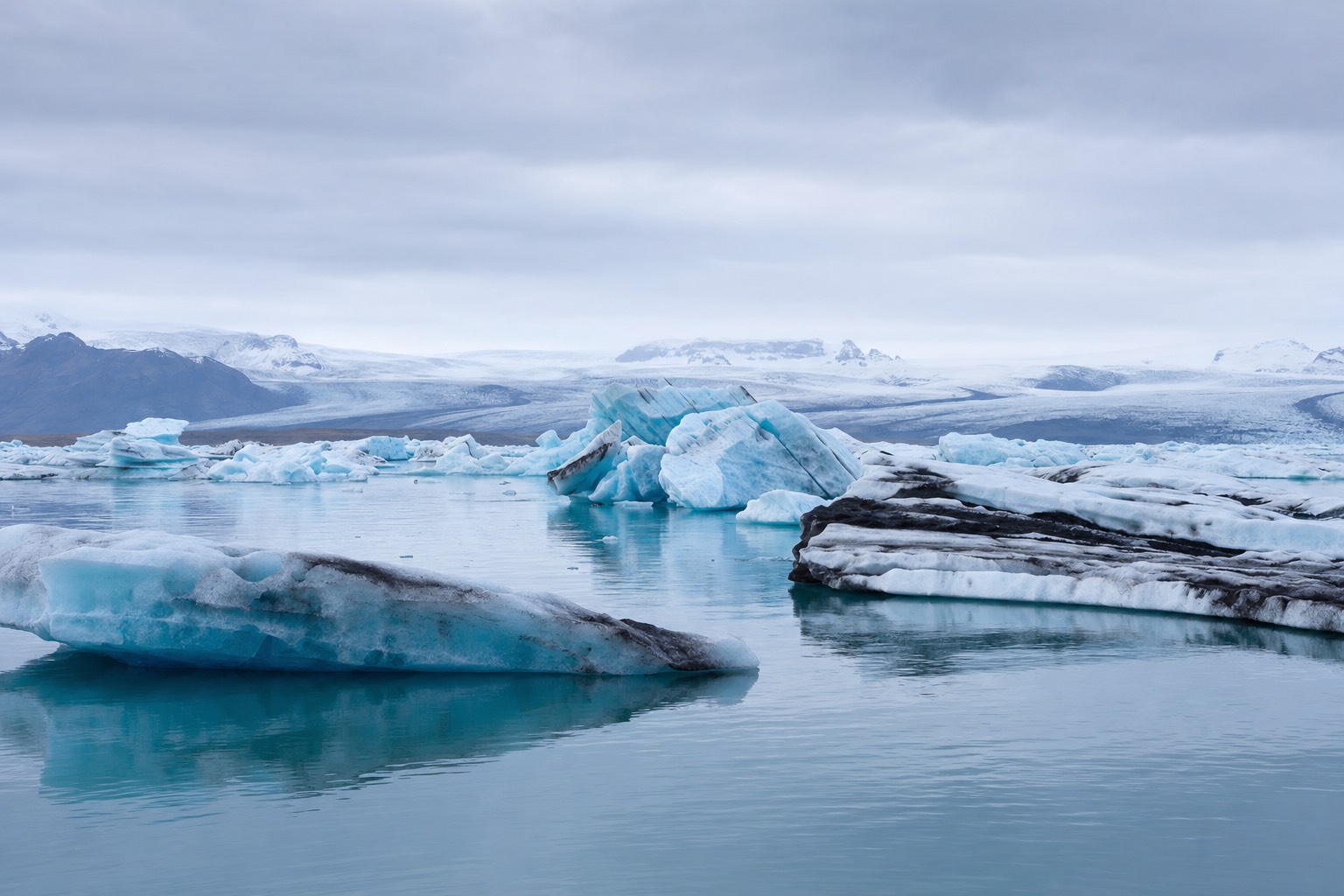
The first thing you notice is the sound. Stand at the edge of Jökulsárlón long enough and the ice starts to talk, a deep pop somewhere out on the water as a berg shifts its weight and rolls over. I have brought travellers here in July sun and in January half-light, and the reaction never changes. People go quiet. A lagoon full of blue and white ice, a glacier tongue closing off the far end, seals lifting their heads between the floes: it does not really look like anywhere else on the planet, and photos undersell it.
That is the honest starting point. Whether it is worth it for you is a slightly different question, because reaching this lagoon from Reykjavík is a genuine commitment. So let me answer the way I would if you asked me on the coach.
So is Jökulsárlón glacier lagoon actually worth it?
For most first-time visitors, yes, comfortably. Jökulsárlón is the single most striking natural site on Iceland's South-East coast, and standing beside a lagoon of thousand-year-old ice is the kind of thing you remember for years. The one real catch is the distance: it is a full, long day, not a quick stop.
I rarely meet someone who regrets the visit itself. The regret, when it comes, is almost always about logistics: underestimating the drive, trying to bolt it onto a packed itinerary, or racing through in twenty minutes because a schedule slipped. Give the lagoon room and it repays you. The people who leave flat are usually the ones who arrived exhausted and left before their eyes adjusted to the scale of it.
There is also a fair-weather truth worth saying out loud. On a grey, sleeting day with low cloud sitting on the water, the lagoon is still beautiful but muted. On a clear morning, with sun catching the blue in the ice, it is jaw-dropping. You cannot order the weather, but you can give yourself the best odds by building in time rather than treating it as a photo stop.
What makes the lagoon different from every other stop in Iceland?
Jökulsárlón is not a viewpoint, it is a living process. Icebergs break off the Breiðamerkurjökull glacier, drift across Iceland's deepest lake at 284 metres, then float out to sea through a short river channel. You are watching a glacier come apart in slow motion, and the scene is never the same twice.
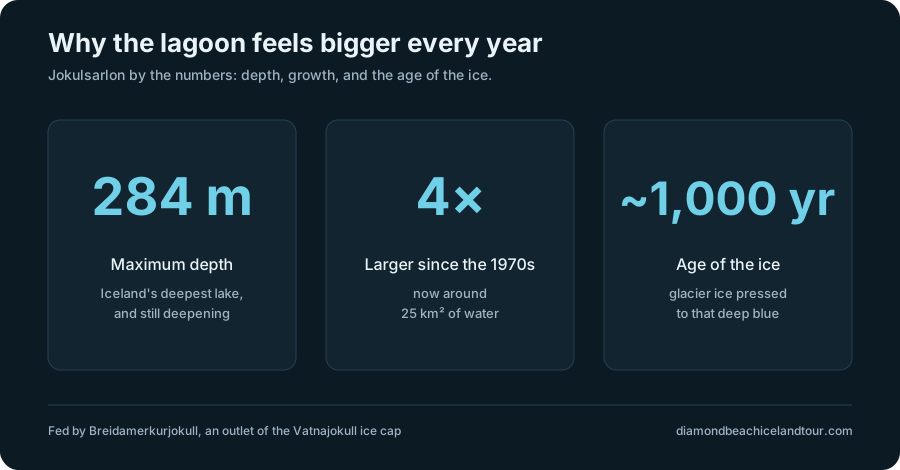
The lagoon only exists because the glacier has been pulling back. Breiðamerkurjökull, an outlet tongue of the vast Vatnajökull ice cap, began retreating in the 1930s, and meltwater filled the hollow it left behind. That makes Jökulsárlón young by geological standards and still growing fast. According to NASA's Earth Observatory, the lagoon has expanded dramatically over recent decades as the ice front recedes, and it now ranks as Iceland's deepest lake, a depth confirmed on the Jökulsárlón entry at Wikipedia.
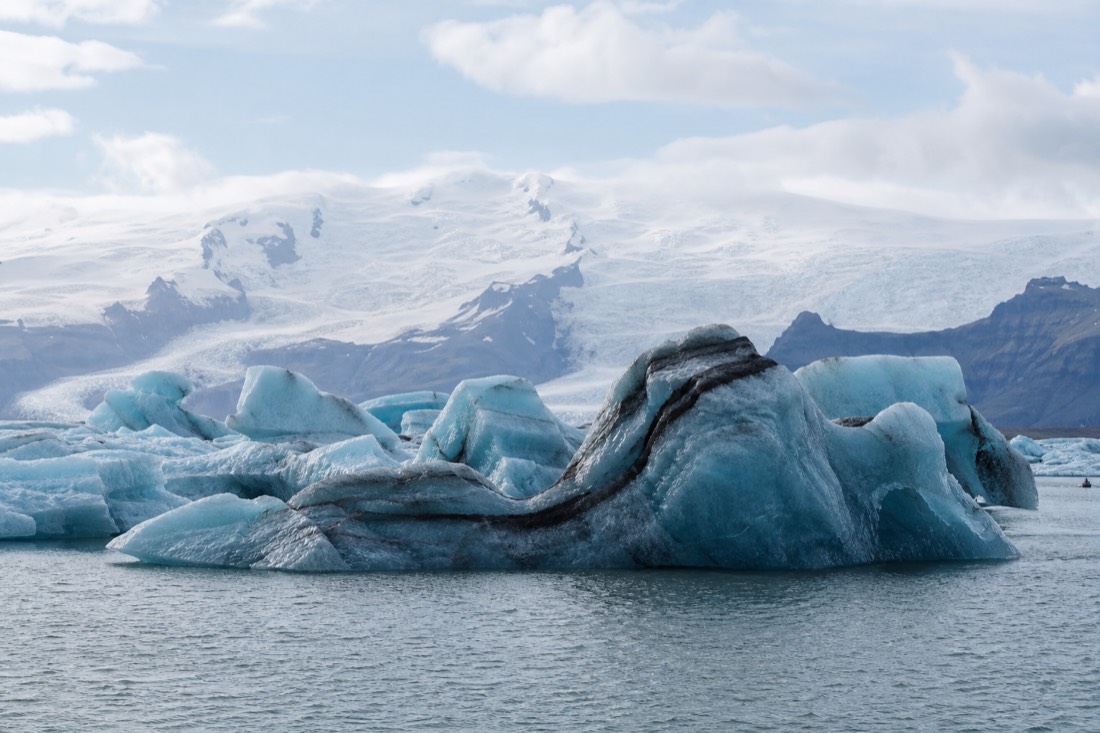
Then there is the ice itself. The bergs are not frozen lake water. They are chunks of glacier, snow that fell centuries ago and got pressed so hard the air squeezed out, which is why the densest pieces glow that unreal blue. Some carry black stripes of volcanic ash from old eruptions, a readable timeline drifting past your feet. Once you know what you are looking at, a twenty-minute stop becomes an hour without you noticing.
Will I actually see seals at the lagoon?
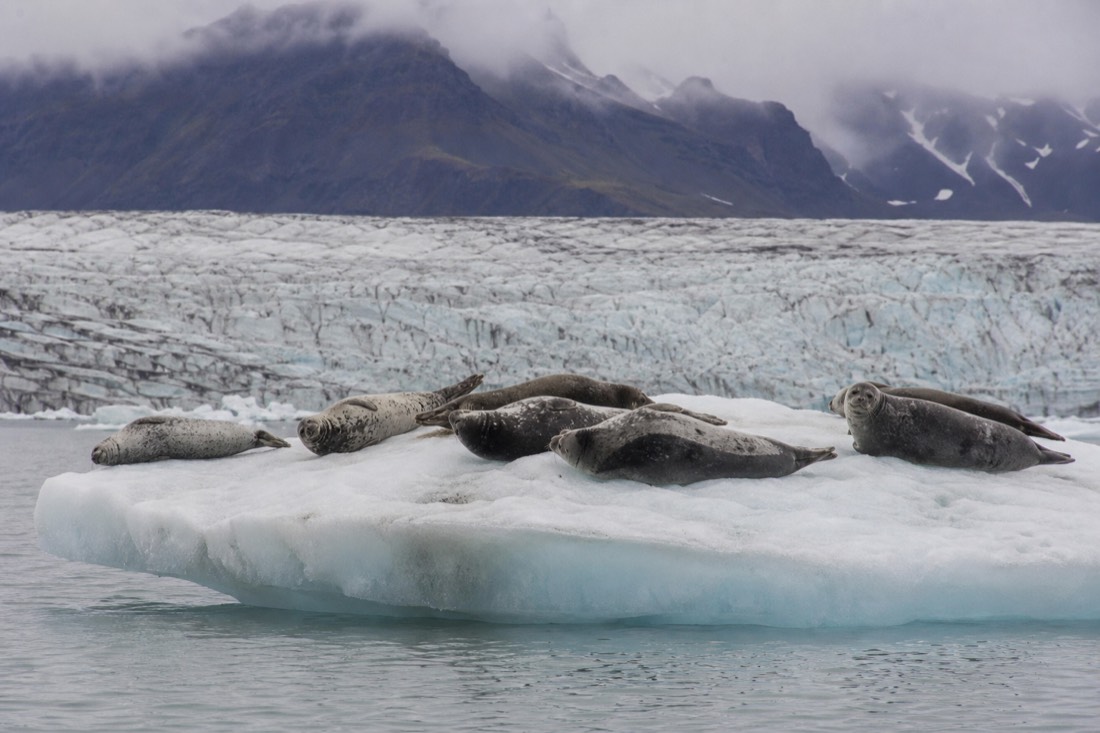
Very often, yes. Harbour seals live in Jökulsárlón year-round, hunting fish that wash in from the sea and hauling out onto flat icebergs to rest. They are easiest to spot in winter, when more of them gather, but summer visitors regularly see heads bobbing between the floes too.
The seals are one of the lagoon's quiet pleasures. They drift in from the ocean on the tidal channel, so the number you see shifts with the tide and the season. On a good winter day I have watched a dozen at once lounging on the ice like they own it. In summer they are around but harder to count against the busier water.
The rule from me, and from every Icelandic guide, is simple: watch, do not approach. The edges of the lagoon crumble without warning, the water is a few degrees above freezing, and the ice you might be tempted to step onto for a closer look can roll at any moment. Seals are wildlife, not a petting zoo. Bring a zoom lens or good binoculars and you will see plenty from safe ground.
Is the Jökulsárlón boat cruise worth adding?
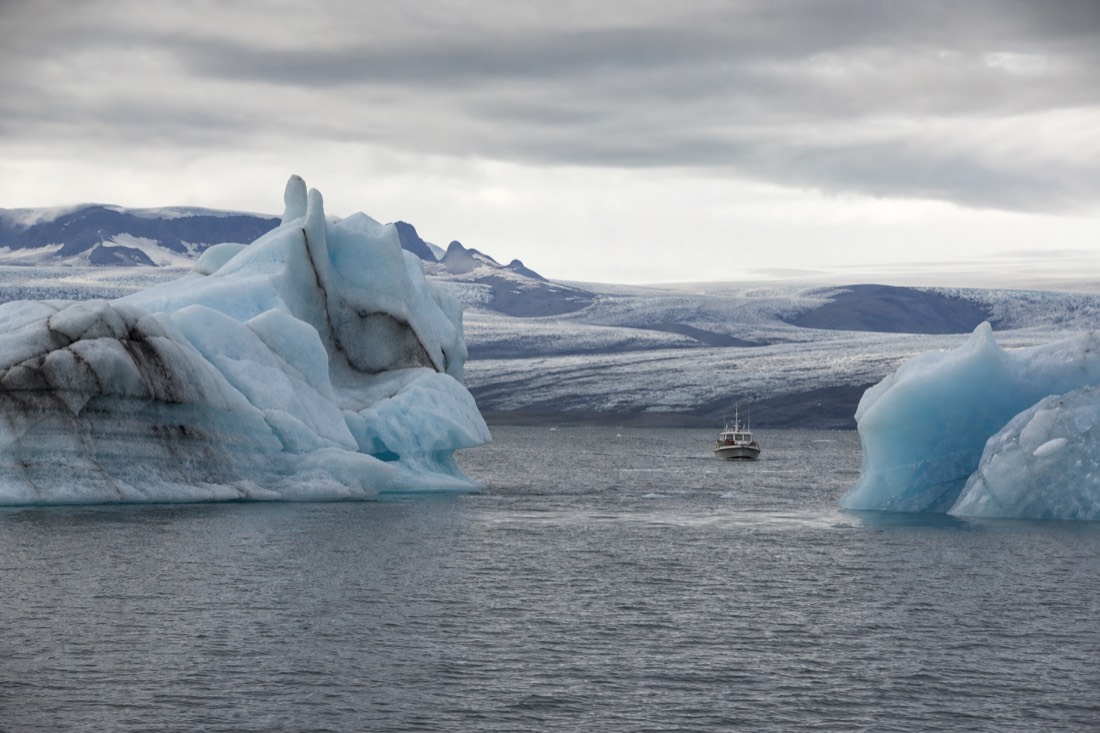
If you are here between roughly May and October and the weather cooperates, the boat is worth it. Floating out among icebergs the size of houses gives you a sense of scale the shore cannot. Outside that season it does not run, and on a rough day it will not sail at all, so treat it as a seasonal bonus, never a guarantee.
Two kinds of trip operate on the lagoon. The amphibian boat is the gentle option, a large wheeled vessel that trundles into the water and cruises slowly among the bergs, good for families and anyone who wants a steady, dry ride with commentary. The Zodiac is the faster, wetter choice, a rigid inflatable that ranges further across the lagoon and gets closer to the glacier front, better for photographers and people who do not mind a splash and a survival suit.
Here is my honest steer. If it is your first time and the boat is running, book it: the perspective from the water is the memory people talk about afterward. If you are on a tight budget or visiting in the dead of winter, the shore view is still magnificent and the boat simply is not available, so you are not missing a thing that day. I break the two boats down further in the guide on whether the Jökulsárlón boat tour is worth it.
| Approach | Amphibian boat | Zodiac boat | From the shore |
|---|---|---|---|
| Season | ~May to October | ~May to October | Year-round |
| Pace | Slow, steady, dry | Fast, close to the glacier | Your own |
| Best for | Families, easy comfort | Photographers, thrill | Any budget, any season |
| Gets you | Out among the bergs | Nearest the glacier front | A wide, free overview |
| Extra cost | Add-on to the day | Add-on to the day | None beyond parking |
How does Jökulsárlón compare to Fjallsárlón?
Jökulsárlón is the big, famous one: deeper, far larger at around 25 square kilometres, busier, and the one with the boats and the seals. Fjallsárlón, a few minutes west, is smaller at roughly 4 square kilometres and quieter, sitting right under the glacier wall. If you only see one, make it Jökulsárlón.
I like Fjallsárlón a lot, and I send people there when they want the same drama with fewer coaches in the car park. It feels more intimate, the glacier looms closer overhead, and the smaller Zodiac trips there are excellent. What it lacks is the sheer scale of Jökulsárlón, the drifting parade of huge bergs, and the easy walk across the road to Diamond Beach where the ice washes up on black sand.
For a first visit with limited time, Jökulsárlón wins on impact. If you have a second morning to spare, pairing both is the move, and I compare them side by side in the Jökulsárlón versus Fjallsárlón guide.
| Feature | Jökulsárlón | Fjallsárlón |
|---|---|---|
| Size | ~25 km², growing | ~4 km², compact |
| Depth | Iceland's deepest, ~284 m | Shallower |
| Crowds | Busiest natural site in the South-East | Quieter, fewer coaches |
| Icebergs | Large, plentiful, drift to the sea | Smaller, close to the glacier |
| Boats | Amphibian and Zodiac | Zodiac only |
| Seals | Regularly seen | Occasional |
| Diamond Beach | Walk across the road | Not adjacent |
What is the lagoon like in summer versus winter?
Both seasons are worth it, and they are almost different places. Summer brings long daylight, the boat cruises, green surrounds and the busiest crowds. Winter trades the boats for low golden light, more seals, a real aurora chance after dark, and a rawer, emptier lagoon, if the road stays open.
Summer is the easy sell. From late May the daylight barely quits, the boats run, and driving Route 1 is straightforward. The trade-off is company: this is the most-visited natural attraction on the coast, and midday in July you share it. My tip is to aim for early or late in the day when the tour buses thin out and the light softens.
Winter is my quiet favourite, with caveats. The ice can take on pink and gold tints at midday because the sun never climbs high, the seals are more numerous, and if the sky clears after dark the northern lights over a frozen lagoon are unforgettable. But the days are short, the boats are off, and the long drive is at the mercy of weather. Check the forecast at en.vedur.is and road conditions before committing, or let a guided coach carry the driving risk for you.
| Season | Daylight | Boat cruise | Seals | Crowds | Bonus |
|---|---|---|---|---|---|
| Summer (Jun–Aug) | Very long | Running | Present | Heaviest | Green landscape, midnight light |
| Shoulder (May, Sep–Oct) | Moderate | Running early/late in window | Present | Lighter | Good balance of light and space |
| Winter (Nov–Mar) | Short | Not running | More numerous | Lightest | Aurora chance, golden low light |
How did Jökulsárlón form, and why does it keep growing?
The lagoon did not exist before the 1930s. Breiðamerkurjökull, an outlet of the vast Vatnajökull ice cap, began retreating around 1934, and meltwater pooled in the hollow it left behind. Since the 1970s the lagoon has quadrupled in size to roughly 25 square kilometres, and sounded to about 284 metres it is now Iceland's deepest lake.
Think about that for a second. A place this famous is younger than plenty of the farmhouses you pass on the drive out. Your grandparents were alive when the first water gathered here, and the lagoon has been expanding ever since, growing outward every year as the glacier front pulls back toward the ice cap and leaves more open water in its place.
The depth is the part that surprises people most. The lagoon keeps deepening as the glacier retreats, which is why 284 metres is a number that will likely be out of date the moment it stops being true. That depth is also why the icebergs can float free and drift rather than grounding in the shallows: there is a lot of cold water underneath them. It is the reason the whole scene moves.
None of this is fixed. The lagoon you photograph on your visit is a snapshot of a system in motion, and the shoreline, the depth and the surface area are all slightly different from what they were a decade ago. That is a strange thing to stand in front of, and it is a large part of why the place stays with people.
| When | What happened |
|---|---|
| Before ~1930s | No lagoon: Breiðamerkurjökull reached much closer to the sea |
| ~1934 | Glacier retreat begins, meltwater starts pooling behind the ice front |
| 1970s to now | Surface area quadruples to roughly 25 km² |
| Today | About 284 m deep, Iceland's deepest lake, still growing |
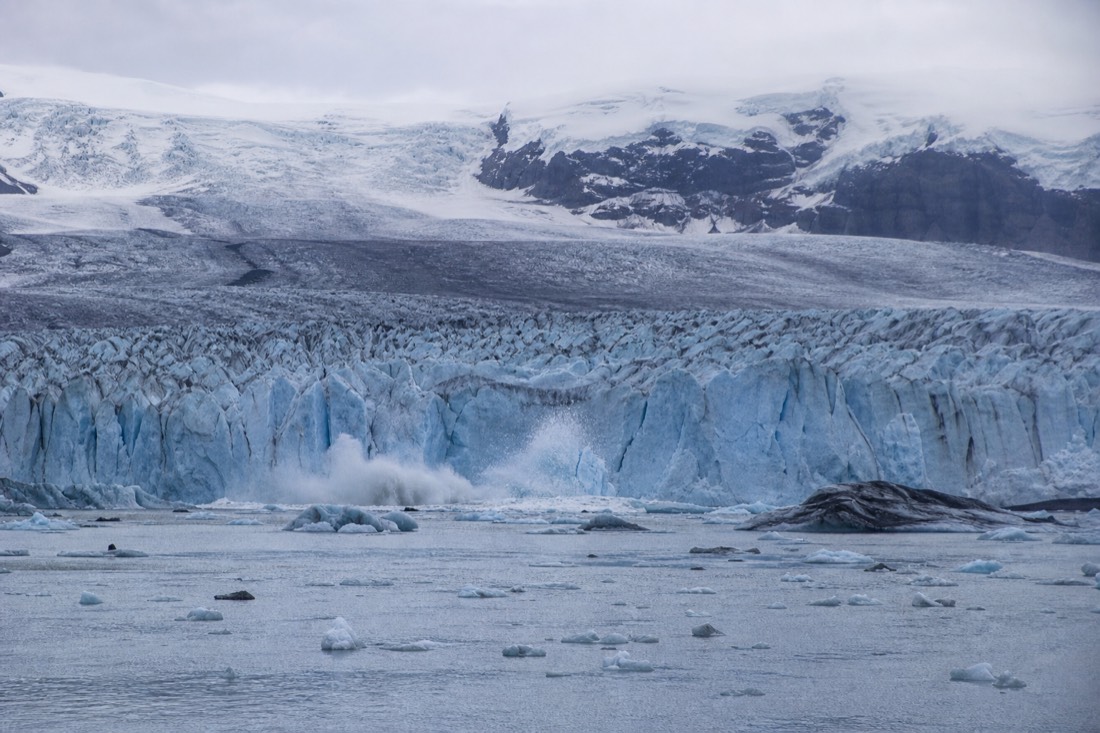
How should I spend the ninety minutes at the lagoon?
On the guided coach day, the lagoon itself is roughly a ninety-minute stop before you cross to Diamond Beach. That is enough if you spend it well: settle in, walk the shoreline away from the car park, watch one berg long enough to see it move, and leave the café for last. Rushing straight to the water and back is the classic waste of it.
Here is the shape I would give that hour and a half, as a planning allowance rather than a fixed timetable. The exact split shifts with weather, the boat, and how the day is running, but the priorities hold. Arrive, let your eyes adjust, and resist the urge to tick it off in ten minutes.
The single best move is to walk. Most people cluster at the main viewpoint by the bridge and never leave it. Stroll two or three minutes along the eastern shore and the crowd thins fast, the angles improve, and you get the seals to yourself. If the boat is running and you have booked it, that eats a good chunk of the stop, so plan the rest around your slot.
Save the café and toilets for the end. They are warm and they are a magnet, and every minute inside is a minute not spent looking at the thing you drove five hours to see. Then cross for Diamond Beach, which is a separate walk and deserves its own twenty minutes.
| Time | What to do | Why |
|---|---|---|
| First 10 min | Stand still at the main viewpoint, let your eyes adjust | Scale only lands once you stop moving |
| Next 25 min | Walk the eastern shore away from the bridge | Fewer people, better angles, closer seals |
| Middle 30–40 min | Boat cruise if booked, or slow photography | The water view is the memory people keep |
| Last 15 min | Café, toilets, then cross for Diamond Beach | Warmth and facilities last, not first |
What does Björn tell visitors to do first at the lagoon?
Put the phone down for the first two minutes. That is the whole trick. I have guided South-Coast and glacier-lagoon days since 2022, more than a thousand travellers through, and the ones who arrive shooting straight away miss the scale entirely. Stand, listen for the ice cracking, find one berg, then start taking pictures once your eyes have caught up.
My name is Björn, I am Icelandic, and I do not drive the BusTravel coach this site features. What I do is stand at this lagoon in every season with people seeing it for the first time, and I have watched the same mistake on repeat. Folks pile off, lift a camera, fire off twenty near-identical frames of the nearest ice, and walk away thinking they have seen it. They have photographed it. That is not the same thing.
The lagoon rewards patience in a way few sights do, because it is moving. Give it five minutes and a berg will roll, a seal will surface, the light will shift on the blue. None of that reaches you if you are staring at a screen. So my first instruction is always the same, and it sounds daft until people try it: do nothing for a moment.
The second thing I tell everyone is to walk further than feels necessary and to keep well back from the water's edge. The banks calve without warning, the lagoon is a few degrees above freezing, and no photo is worth a slip. Respect the edge, move along it, and the place opens up.
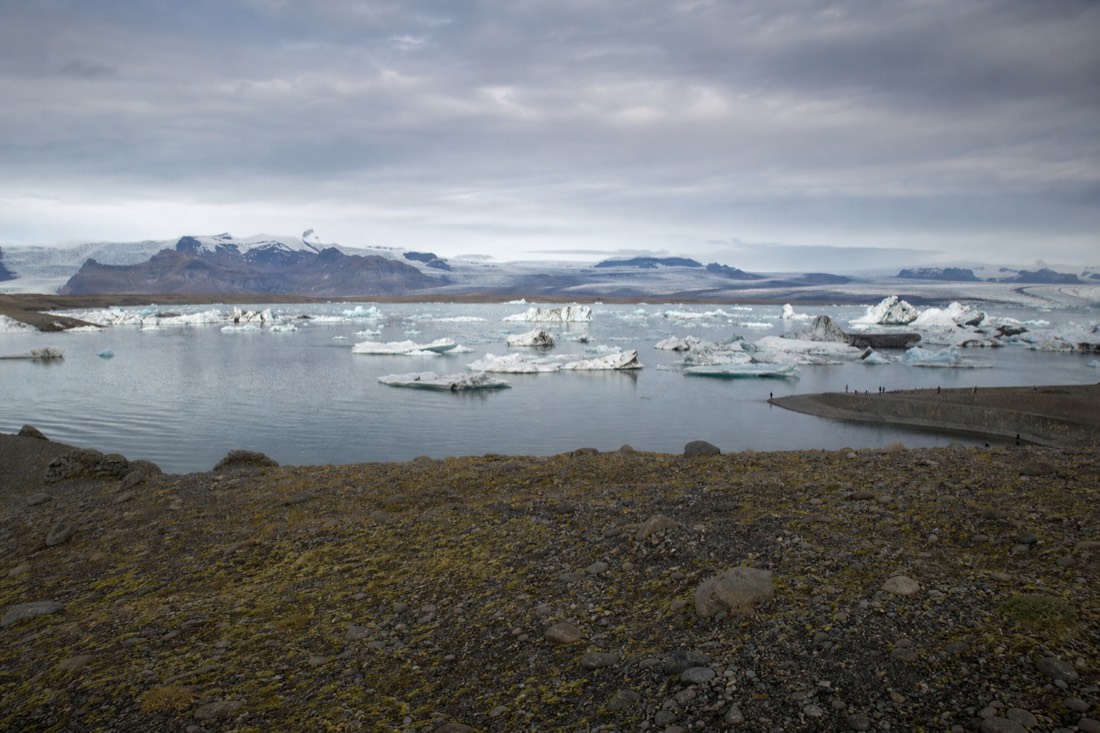
When are you most likely to actually see the seals?
Harbour seals live here all year, but the odds swing with the season and the tide. Winter is the reliable window, when more of them gather and haul out on the flat ice. They ride in from the sea on the tidal channel, so a rising or high tide often brings more of them into the lagoon, and calm, quiet moments away from the crowd are when you spot the most.
The seals are not a scheduled attraction, which is exactly why seeing one feels earned. Their numbers shift with the water. Because they drift in through the short channel that links the lagoon to the ocean, the tide genuinely matters: more sea coming in tends to mean more seals coming with it. I have stood here at low water and counted two, then watched a dozen appear as the tide turned.
Time of day plays a part too. Early and late, when the tour buses are thinner and the surface is calm, heads are easier to pick out against the water. In the busy middle of a summer day they are still there, just harder to spot in the chop and the glare. Bring a zoom or binoculars and scan the flat bergs, not the open water: that is where they rest.
The table below is my rough guide to the odds, built from seasons of standing here, not a guarantee. Wildlife does what it wants. Watch from safe ground, never approach, and treat every sighting as a gift rather than a given.
| Season | Seal numbers | Best conditions | Where to look |
|---|---|---|---|
| Winter (Nov–Mar) | Highest, gather in numbers | Calm day, high or rising tide | Hauled out on flat icebergs |
| Shoulder (Apr–May, Sep–Oct) | Moderate | Early or late, quieter water | Between the drifting floes |
| Summer (Jun–Aug) | Present, harder to count | Early morning before the buses | Near the tidal channel mouth |
Who should honestly skip Jökulsárlón?
Most people should go, but not everyone. If you have a single half-day in Iceland, get carsick easily on winding roads, are travelling with restless small children who will not last a fourteen-hour round trip, or physically cannot handle a long coach day, the lagoon may cost you more than it gives. There is no shame in choosing a closer stop.
I would rather talk someone out of a miserable day than sell them one. The drive is the deciding factor almost every time. From Reykjavík it is about 380 kilometres each way, five to six hours of road in each direction, and if your body or your schedule cannot absorb that, the beauty at the far end will not rescue the day. The people who leave unhappy are usually the ones who ignored this and pushed on anyway.
There are honest alternatives. If time or stamina is the issue, the closer South-Coast waterfalls and black-sand beaches near Vík deliver a full, satisfying day with far less driving. If it is winter and the forecast is ugly, letting a guided coach carry the risk is smarter than white-knuckling an icy Route 1 you do not know. And if glacier lagoons are truly your thing but the crowds are not, quieter Fjallsárlón sits a few minutes west.
Everyone else, and that is the large majority, should go. The matrix below is the quick version of the conversation I have with travellers most weeks.
| Traveller | Verdict | Why |
|---|---|---|
| First-timer with a spare full day | Go | Peak payoff, the anchor sight of the South-East |
| Serious car-sickness | Reconsider | Five to six hours each way is unavoidable |
| Restless toddlers, tight patience | Reconsider or split | A fourteen-hour coach day is a lot to ask |
| Only a half-day free | Skip, choose closer | South-Coast waterfalls give more per hour |
| Winter visitor, bad forecast | Go guided, not self-drive | Let someone else read the road and ice |
| Crowd-averse lagoon lover | Add or swap Fjallsárlón | Same drama, fewer coaches |
Is the long day and the drive really worth it?
For a once-in-a-lifetime trip, yes, but go in with clear eyes. Jökulsárlón sits about 380 kilometres from Reykjavík, roughly five to six hours of driving each way, so a day trip runs close to fourteen hours door to door. That is the honest cost of the ticket, and it is the one thing people underestimate.
The drive is not wasted time, to be fair. Route 1 threads past Seljalandsfoss, the black cliffs near Vík and endless moss-covered lava, so the journey is part of the experience rather than dead mileage. Still, five hours is five hours. If you are prone to car sickness or travelling with restless kids, plan around it honestly, and read how long you actually need at Jökulsárlón before you lock in a plan.
This is exactly where a guided coach earns its keep in winter. You skip the tiring drive on a road you do not know, someone else reads the weather and the ice, and you arrive fresh enough to enjoy the lagoon instead of white-knuckling Route 1 in the dark. If that is the trip you want, book the guided Jökulsárlón & Diamond Beach day trip and check live availability and prices on GetYourGuide.
So, worth it? On the strength of the lagoon alone, without question. The blue ice, the seals, the sheer strangeness of watching a glacier calve into Iceland's deepest lake: few places deliver like this. Just book it as the anchor of your day, not an afterthought, and give yourself the hours it deserves.
Your Next Step
Choose a Jökulsárlón plan that fits your trip
Initial editorial suggestion. Confirm your date and party requirements with the operator.
Have a travel date in mind? Check the approximately 14-hour Reykjavík departure, selected pickup option and April-to-October boat choice before arranging the rest of your South Coast itinerary.
Ages 6+. Allow for delays. Meals are extra; glacier hiking and ice-cave visits are separate experiences.
Refine Your Choice And View Alternatives
Reykjavik: Jokulsarlon Glacier Lagoon & Diamond Beach Tour
14-hour coach trip from Reykjavík with an English-speaking guide, Jökulsárlón and Diamond Beach stops. Pickup and the seasonal boat ride depend on the booked option.
This tool compares tour formats, meeting points, listed ages, seasonal windows and duration. Seasonal guidance is not live availability. It does not confirm availability or personal suitability. Local activities do not include the drive from Reykjavík; leave extra time for travel and check-in.
Jökulsárlón Glacier Lagoon Kayaking Tour: A 1.5-hour guided paddle from the Jökulsárlón parking area, with a two-piece suit, sit-on-top kayak and equipment. English-speaking guide. Ages 14+, able to swim and comfortable in water. Not suitable for back or heart problems or those prone to seasickness. Arrive 20 minutes early; no Reykjavík transfer.
Jökulsárlón: The Original Ice Cave Tour on Vatnajökull: Around 2.5–4 hours from Jökulsárlón, with an English-speaking glacier guide, modified 4x4 transport and safety equipment. Ages 10+. A cave is not guaranteed: the route may visit a blue-ice canyon, tunnel or other feature. Requires general fitness and uneven-ground walking; not suitable for mobility impairments.