Jökulsárlón vs Fjallsárlón: Which Glacier Lagoon Is Better?
Two glacier lagoons, about 10 km apart, and they are not the same trip. Here is how to pick the right one.
 Written with Björn Einarsson, Iceland South Coast & glacier-lagoon tour guide and local specialist
Short answer
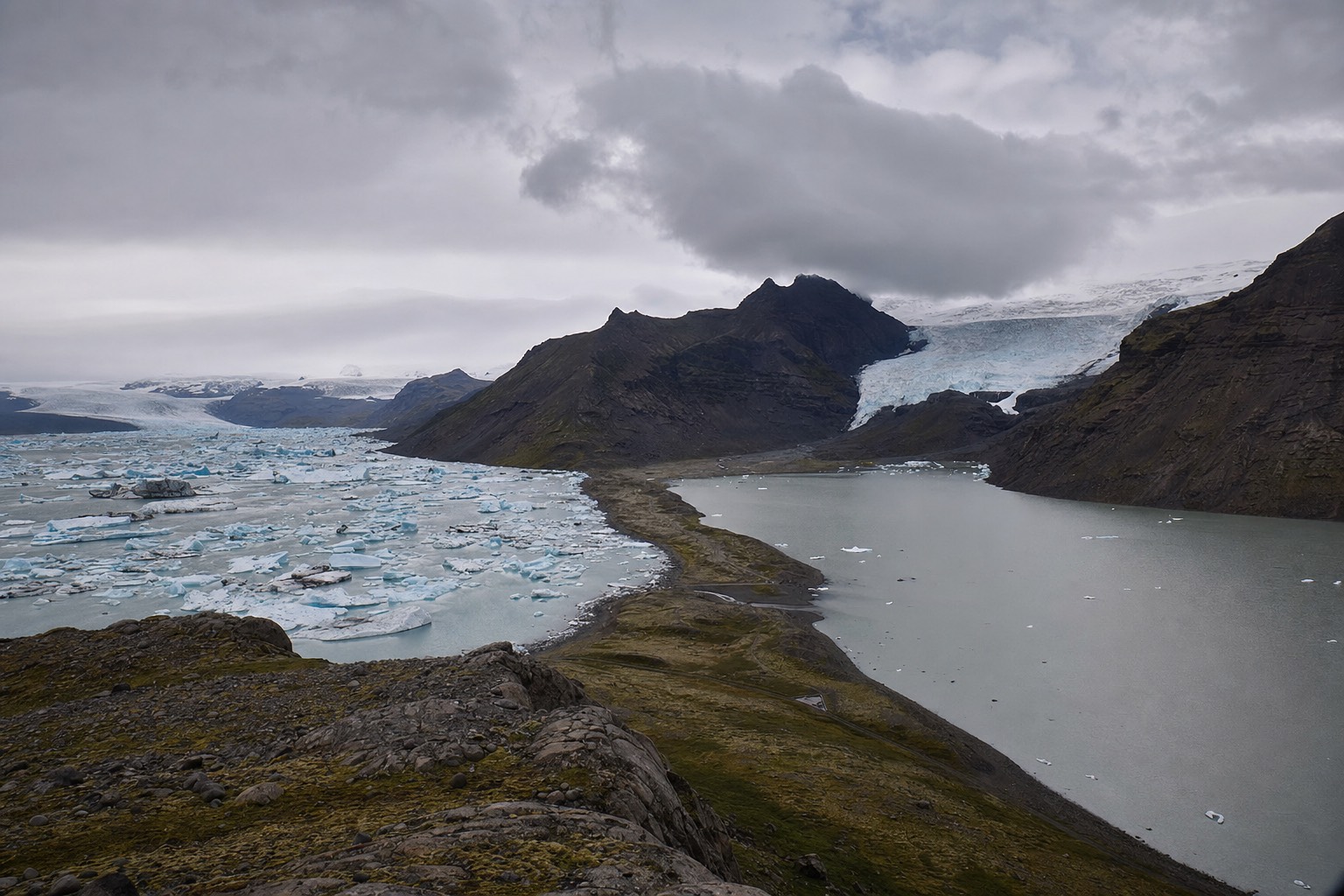
Jökulsárlón is bigger, deeper, and dramatic, with Diamond Beach, boat cruises, seals, and crowds. Fjallsárlón is smaller and far quieter, with the glacier wall looming closer over fewer icebergs. Most first-timers want Jökulsárlón. Fjallsárlón rewards anyone chasing calm and a nearer glacier.
Most people have never heard of the second lagoon until they are already standing at the first one. They pull into Jökulsárlón, see a car park half full of coaches and a shoreline busy with tripods, and somebody mentions there is a quieter one just up the road. That quieter one is Fjallsárlón, roughly ten minutes west, and I get asked about it constantly: is it better, is it worth the extra stop, did I pick the wrong lagoon? I have stood at both in the same afternoon more times than I can count. They are cousins, not twins, and the right one depends entirely on what you came to Iceland to feel.
What is the difference between Jökulsárlón and Fjallsárlón?
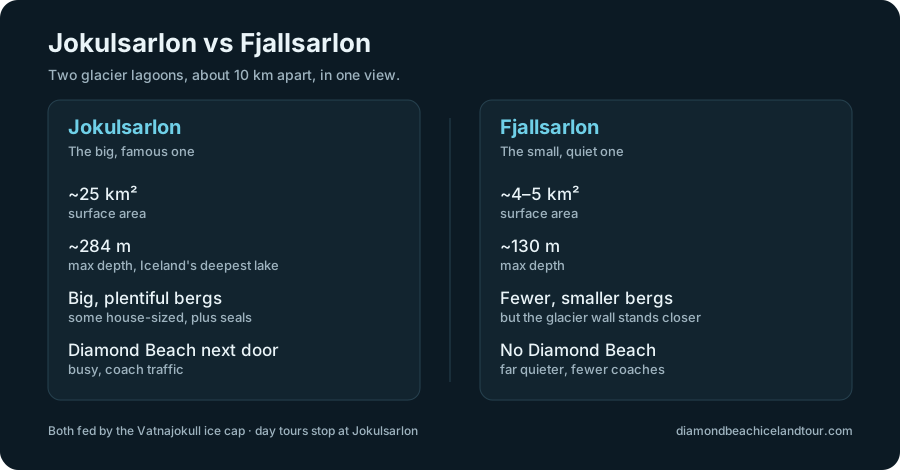
Jökulsárlón is the large, famous lagoon: about 25 square kilometres, up to 284 metres deep, packed with big icebergs, seals, boat cruises, and the black sand of Diamond Beach next door. Fjallsárlón is much smaller, roughly 4 to 5 square kilometres and around 130 metres deep, with fewer bergs but the glacier wall standing far closer and a fraction of the crowds.
Both lagoons sit at the southern edge of Vatnajökull, Europe's largest ice cap, fed by different outlet glaciers of the same enormous system. Jökulsárlón collects meltwater and ice from Breiðamerkurjökull, and it is Iceland's deepest lake, still growing as the glacier retreats. Fjallsárlón sits below Fjallsjökull, a steeper tongue of the same ice cap, which is why the glacier face there feels close enough to touch even though it is not.
The size gap is the thing photos never quite convey. Jökulsárlón is a wide, open basin where icebergs the size of buildings drift toward the river mouth and out to sea. Fjallsárlón is more of an amphitheatre: a tighter bowl of water with the glacier crowding the far side. You see fewer icebergs, and they tend to be smaller, but the wall of ice behind them dominates the whole view in a way Jökulsárlón's more distant glacier does not.
Here is the head-to-head, using figures verified against the lagoons' own listings and official park information.
| Feature | Jökulsárlón | Fjallsárlón |
|---|---|---|
| Surface area | About 25 km² | About 4 to 5 km² |
| Maximum depth | About 284 m (Iceland's deepest lake) | About 130 m |
| Parent glacier | Breiðamerkurjökull (Vatnajökull outlet) | Fjallsjökull (Vatnajökull outlet) |
| Icebergs | Many, large, some house-sized | Fewer, generally smaller |
| Glacier wall | More distant across the water | Much closer, dominates the view |
| Diamond Beach | Yes, right beside it | No |
| Seals | Regularly seen | Rare |
| Boat cruises | Amphibian and Zodiac | Zodiac only, separate operator |
| Crowds | Busy, coach traffic | Far quieter |
Which glacier lagoon is better for you?
Neither wins outright; they suit different travellers. Choose Jökulsárlón for the classic bucket-list scene, the biggest icebergs, Diamond Beach, seals, and a boat option for all ages. Choose Fjallsárlón if you want quiet, a glacier that feels close enough to breathe on, and a small-group boat, and you are willing to trade the famous icebergs and the black-sand beach for calm.
I think of it as a question of what you will remember. First-time visitors almost always mean Jökulsárlón when they picture "the glacier lagoon", and they are right to. The scale, the drifting ice, the walk over to Diamond Beach where bergs wash up on black sand like scattered glass: that is the image Iceland sells, and it delivers. If you only have one stop and one shot at the south-east, take the famous one. My honest breakdown of whether Jökulsárlón glacier lagoon is worth it walks through exactly what you get for the long drive.
Fjallsárlón is the connoisseur's pick, and I mean that plainly rather than as a dodge. Come here if you have already seen the famous shots a hundred times and want something rawer and less staged. The lack of crowds is not a small thing. On a busy summer day Jökulsárlón's shore can feel like a viewing platform with a queue, while Fjallsárlón often gives you long stretches of near-silence with the glacier cracking somewhere across the water. For the person who values that, it is genuinely the better lagoon.
| If you are... | Better lagoon | Why |
|---|---|---|
| A first-timer wanting the classic scene | Jökulsárlón | Biggest bergs, Diamond Beach, the postcard view |
| A photographer chasing a close glacier | Fjallsárlón | Wall of ice fills the frame, fewer people |
| Travelling with young kids | Jökulsárlón | Amphibian boat, seals, easy shore, facilities |
| Craving quiet over spectacle | Fjallsárlón | A fraction of the crowds, calmer shore |
| On a tight Reykjavík day tour | Jökulsárlón | It is the stop the coaches make |
| Wanting a small-group Zodiac ride | Fjallsárlón | Smaller operator, more intimate boat |
| Here for icebergs on a black beach | Jökulsárlón | Diamond Beach is right next door |
If it is specifically the ice-on-black-sand image you are after, that only exists at one of them; my take on whether Diamond Beach is worth it covers that stop in detail.
Is Fjallsárlón's glacier wall really closer?
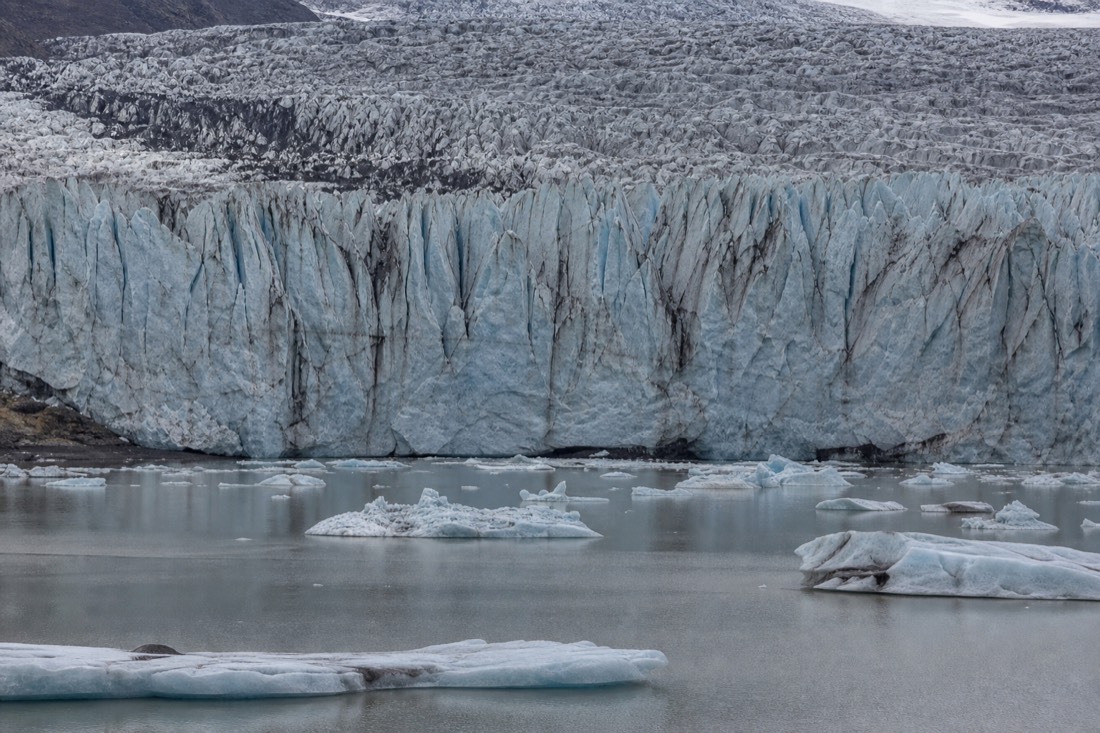
Yes, and it is the single best reason to choose it. At Fjallsárlón the outlet glacier Fjallsjökull sits close across a compact lagoon, so the ice wall looms large from the shore and very large from the boat. At Jökulsárlón the glacier snout has retreated far back, so the calving face is distant and you mostly watch icebergs that have already broken free and drifted toward you.
This catches people out. They arrive at Jökulsárlón expecting to stand under a towering blue wall of ice, and instead they find a wide lagoon where the glacier is a pale line on the horizon. The drama at Jökulsárlón is the icebergs, not the glacier face. The bergs are enormous and close, and that is the show. But if your mental image was the glacier itself, Fjallsárlón is the one that matches it.
The reason is geography plus retreat. Breiðamerkurjökull has pulled back so far that Jökulsárlón is now Iceland's deepest lake, at around 284 metres, and it has quadrupled in size since the 1970s. That growth means more open water between you and the ice. Fjallsárlón's glacier has not retreated nearly as far into as large a basin, so the wall stays near. You can read the geology and history of the bigger lagoon on the Wikipedia entry for Jökulsárlón, and the official park pages at Vatnajökull National Park cover how both lagoons fit into the wider ice cap.
Do Reykjavík day tours stop at Fjallsárlón or Jökulsárlón?
Almost always Jökulsárlón, not Fjallsárlón. The full-day coach tours from Reykjavík are built around the famous lagoon and Diamond Beach, because that is the pairing people book for. Fjallsárlón sits off the main stop and is rarely included on a standard day trip, so if you specifically want it, you generally need your own car or a specialist tour.
The drive decides this. Jökulsárlón is about 380 kilometres from Reykjavík, roughly five to six hours each way, which makes the guided coach a long day of around 14 hours as it is. Adding a second lagoon eats time the schedule does not have, so operators pick the headline one and pair it with the black-sand beach next door. That is the right call for most visitors, even if it means Fjallsárlón stays a road-trip stop rather than a day-tour one.
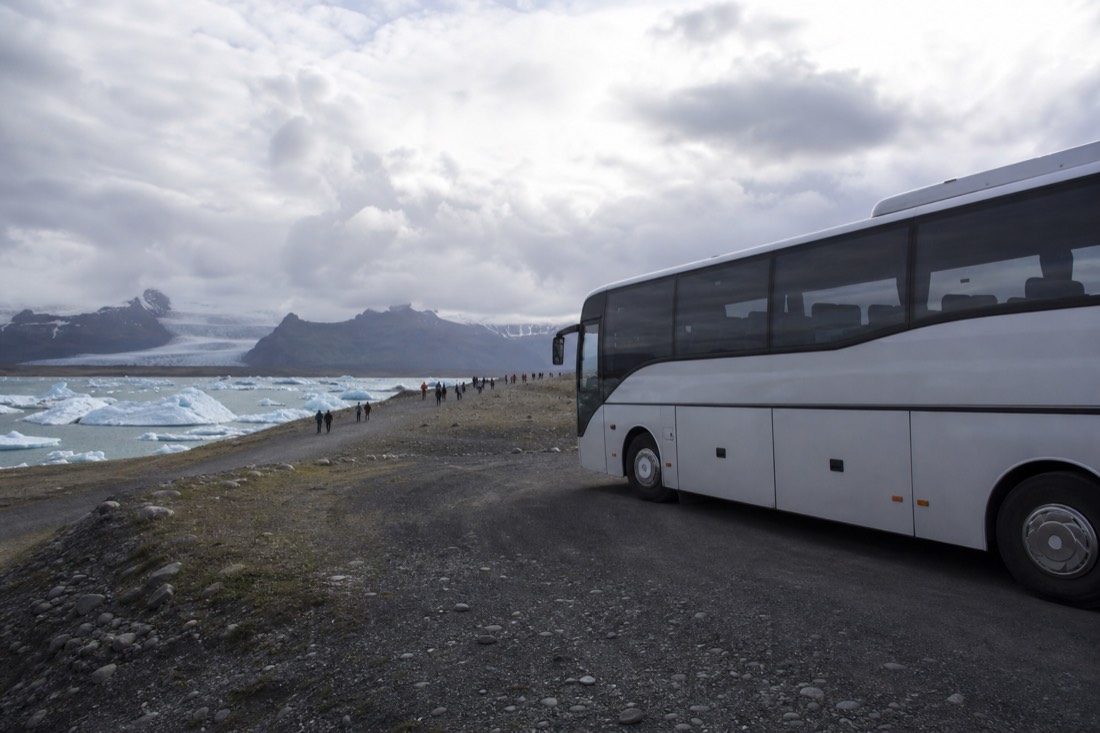
So if you are coming from the capital without a rental, the practical choice is made for you: you are seeing Jökulsárlón and Diamond Beach, and honestly that is the stronger single day out. To do it without the winter self-drive risk on Route 1, book the guided Jökulsárlón & Diamond Beach day trip and check live availability and prices on GetYourGuide. The optional lagoon boat cruise runs seasonally from spring into autumn; if you are weighing that add-on, my verdict on whether the Jökulsárlón boat tour is worth it breaks down the amphibian and the Zodiac.
Self-drivers get the freedom to do both, and there is a case for it. Hit Fjallsárlón first for the quiet and the close glacier, then Jökulsárlón for the big icebergs and Diamond Beach. Ten minutes of extra driving buys you two very different lagoons, and seeing them back to back is the clearest way to understand what each one does best.
How do you get to each lagoon, and what is at them?
Both lagoons lie on the south-east coast near the eastern end of Route 1, about 380 km from Reykjavík. Jökulsárlón sits right on the Ring Road with a large paid car park, café, toilets, boat ticket office, and Diamond Beach across the road. Fjallsárlón is a short signposted turn-off, with free parking, a restaurant, and its own boat base, but noticeably fewer facilities and people.
The access difference is small but real. Jökulsárlón is impossible to miss: the road runs right past it, the bridge over the outlet river is a landmark, and the infrastructure is built for volume. Fjallsárlón asks you to turn off and drive a short way in, which is part of why it stays quieter. You can check the current boat season and prices on the operator's own site at fjallsarlon.is before you plan a stop there, since the Zodiac runs on a seasonal schedule.
Facilities matter more than people expect on a long day out here, especially with kids or in winter. Here is how access and what you find on the ground compare.
| Access and facilities | Jökulsárlón | Fjallsárlón |
|---|---|---|
| Distance from Reykjavík | About 380 km, 5 to 6 h each way | Similar, about 10 km before Jökulsárlón |
| Road access | Directly on the Ring Road | Short signposted turn-off |
| Parking | Paid, about 1,000 to 1,100 ISK | Free at the main visitor area |
| Boat operator | Amphibian and Zodiac on-site | Separate Zodiac operator |
| Boat season | Roughly spring to autumn | Roughly April to November |
| Food | Café and food truck | Restaurant on-site |
| Toilets | Yes | Yes |
| On a Reykjavík day tour | Standard stop | Rarely included |
Höfn, the nearest town with hotels and dinner, sits about 80 km further east, which is worth knowing if you are self-driving and want to stay the night rather than push all the way back to the capital in the dark.
So, which glacier lagoon should you visit?
If you can only see one, and especially if you are on a day tour from Reykjavík, visit Jökulsárlón: it is bigger, more dramatic, comes with Diamond Beach and seals, and it is the stop the tours make. Add Fjallsárlón only if you are self-driving and want the quiet, the close glacier wall, and a small-group boat. If you have the time to do both, do them back to back and let each one surprise you.
I never tell people Fjallsárlón is "better" in the abstract, because that misreads what they usually want. Nine out of ten first-time visitors are chasing the scene they have seen in photographs, and that scene lives at Jökulsárlón and Diamond Beach. Sending them thirty minutes up the road to the small lagoon instead would leave most of them slightly deflated, wondering where the giant icebergs went.
But the tenth traveller, the one who sighs at a crowded car park and wants the ice to themselves, is the reason I always mention the second lagoon. For them, Fjallsárlón is not a lesser Jökulsárlón. It is a different, calmer, closer experience of the same great ice cap, and it might just be the stop they remember longest. Match the lagoon to the feeling you are after, and neither one will let you down.
Your Next Step
Match your lagoon experience
Initial editorial suggestion. Confirm your date and party requirements with the operator.
Have your travel date in mind? Check the selected Reykjavík pickup or meeting-point option and the seasonal lagoon boat add-on before arranging the rest of your Jökulsárlón day.
Ages 6+. Allow for delays. Meals are extra; glacier hiking and ice-cave visits are separate experiences.
Refine Your Choice And View Alternatives
Reykjavik: Jokulsarlon Glacier Lagoon & Diamond Beach Tour
14-hour coach trip from Reykjavík with an English-speaking guide, Jökulsárlón and Diamond Beach stops. Pickup and the seasonal boat ride depend on the booked option.
This tool compares tour formats, meeting points, listed ages, seasonal windows and duration. Seasonal guidance is not live availability. It does not confirm availability or personal suitability. Local activities do not include the drive from Reykjavík; leave extra time for travel and check-in.
Fjallsárlón: Secluded Glacier Hike and Iceberg Boat Tour: An English-guided Fjallsárlón Zodiac outing combined with a Fjallsjökull glacier hike, with glacier equipment and a flotation jacket. Ages 14+. This is a boat-and-hike combination, not a boat-only ticket. Not suitable for mobility impairments. Confirm total duration before arranging onward travel.
Jökulsárlón Glacier Lagoon Kayaking Tour: A 1.5-hour guided paddle from the Jökulsárlón parking area, with a two-piece suit, sit-on-top kayak and equipment. English-speaking guide. Ages 14+, able to swim and comfortable in water. Not suitable for back or heart problems or those prone to seasickness. Arrive 20 minutes early; no Reykjavík transfer.