Jökulsárlón Self-Drive vs Guided Tour: Which Should You Choose?
The choice looks like a money question. Spend a winter on this coast and you learn it is really a driving question.
 Written with Björn Einarsson, Iceland South Coast & glacier-lagoon tour guide and local specialist
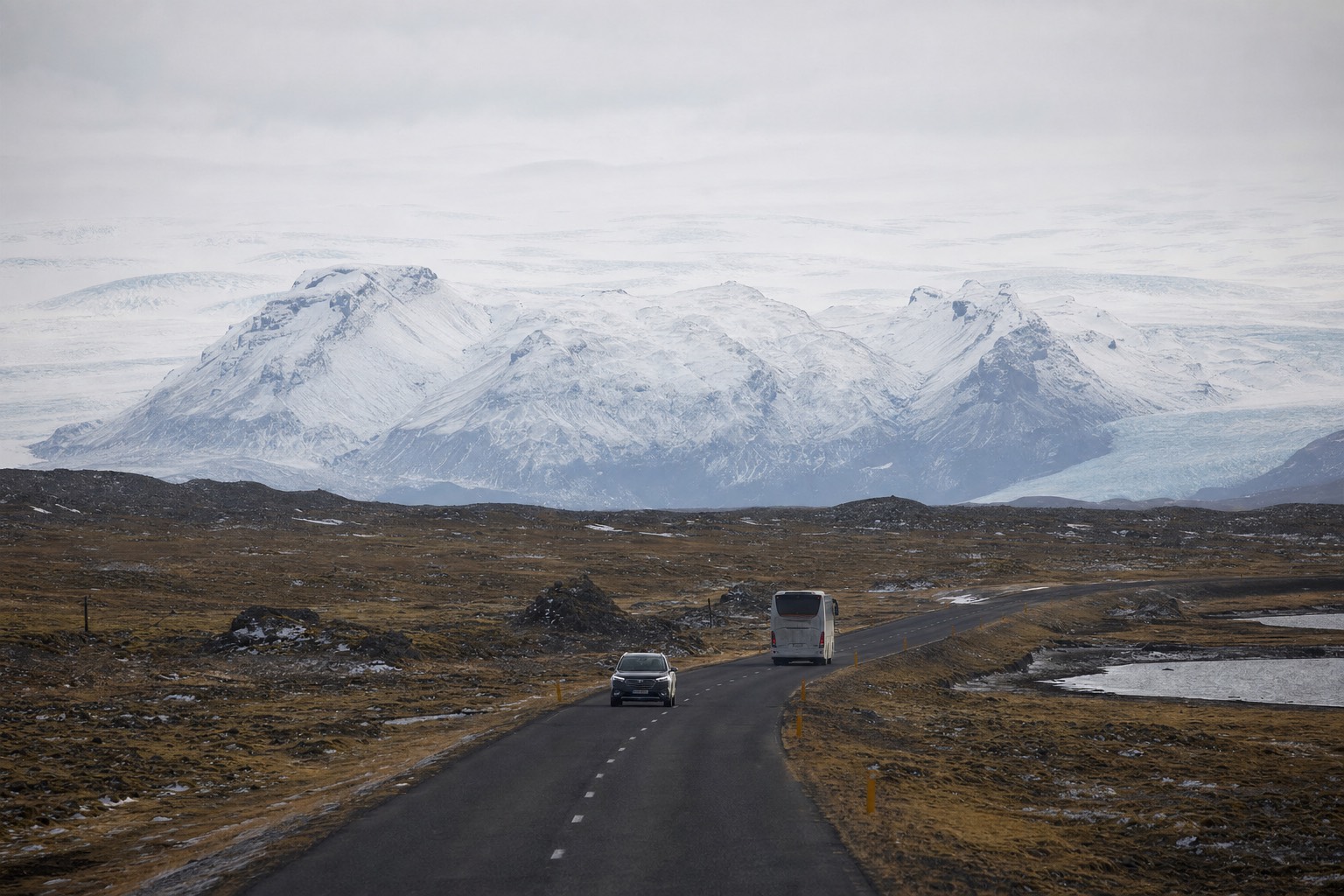
Short answer
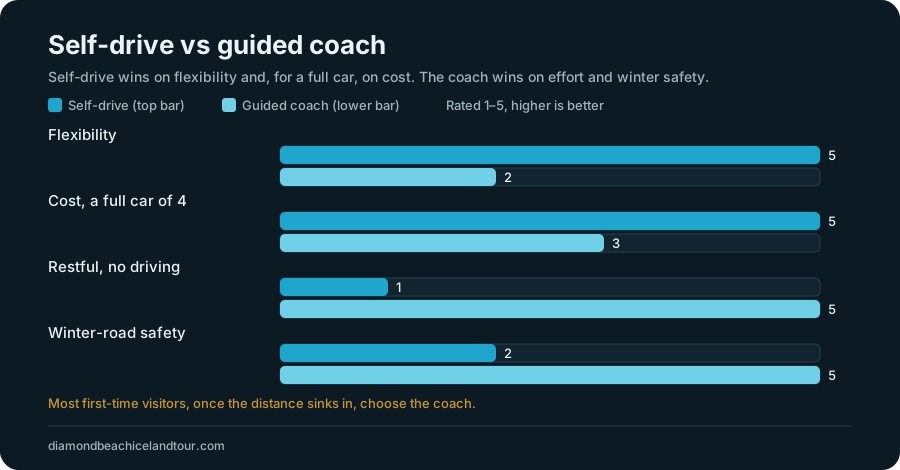
Self-driving can be cheaper for a group of four and gives you total control of timing, so confident summer drivers often win by renting. A guided coach wins for solo travellers, non-drivers, and anyone visiting in winter, because it absorbs the 760 km round trip, the fuel, and the Route 1 risk for one seat price.
Two travellers ask me the same question within a week, and they get different answers. The couple in July, both happy behind the wheel, I send off to a rental desk. The solo visitor arriving in January, nervous about ice and driving on the right for the first time, I steer straight onto a coach. Same lagoon, opposite advice. The decision between self-driving to Jökulsárlón and letting a guided tour do it is not really about which is "better." It is about who you are, when you are going, and how honest you are willing to be about a very long day on the road.
I guide this south-east coast, so I have driven Route 1 to the ice in blue summer light and in the kind of January wind that shoves a small car sideways. Here is how the two options actually compare on money, time, freedom, and risk, with the numbers laid out so you can decide for yourself.
Is it cheaper to self-drive or take a guided tour to Jökulsárlón?
It depends entirely on how many of you are travelling. A rental splits across everyone in the car, so for a group of four, self-driving usually undercuts four coach seats. For a solo traveller the maths flips hard, because one person carries the whole rental, fuel, insurance, and parking bill against a single seat price. Two is the rough crossover point.
The trap in every "self-drive is always cheaper" blog post is that it quietly assumes a full car. The rental, the fuel for the roughly 760 km round trip, and the lagoon parking are fixed costs that do not care whether one person or four is sharing them. Divide them by four and the per-head number drops fast. Leave one person carrying them alone and a guided seat looks like a bargain.
Here is the day priced out honestly. The self-drive column is the whole car for one day trip; the guided column is what four people pay to sit on the coach.
| Cost item | Self-drive (whole car, one day) | Guided coach (4 seats) |
|---|---|---|
| Vehicle | Economy rental, ~$55–70/day | none |
| Fuel (~760 km round trip) | none | |
| Insurance top-ups (sand & ash, gravel, CDW) | ~$25–45/day | none |
| Lagoon parking | 1,110 ISK (~$9) | none, the coach drops you |
| Guide and driving | you drive ~10 hours | included, per seat |
| Total | ~$170–230 for the car | 4 × the live GYG seat price |
| Per person, group of 4 | ~$43–58 each | one seat price each, flat |
Read the last two rows together and the whole argument sits there. A solo driver wears that $170 to $230 alone, so a single guided seat almost always wins. Split four ways it becomes roughly $43 to $58 a head, which can slide under four coach tickets. If you want the full attraction budget, parking, food stops, the optional boat, I break it all down in what it costs to visit Jökulsárlón and Diamond Beach.
What does the self-drive day actually cost to run?
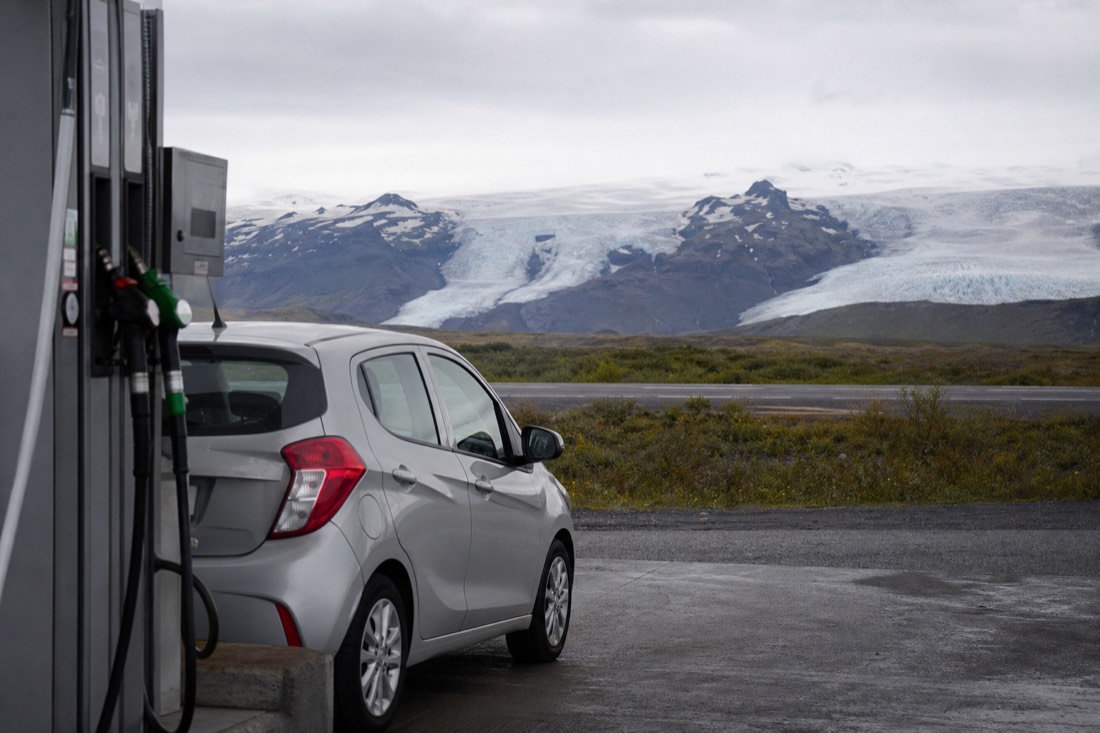
A one-day self-drive is mostly rental plus fuel. A small economy car runs from around $55 to $70 a day in peak season, petrol sits near 217 ISK per litre, and the 760 km round trip burns roughly 50 litres, so fuel alone lands around 10,000 to 13,000 ISK. Add the sand-and-ash insurance this coast makes worth taking, plus 1,110 ISK to park at the lagoon.
Fuel is the number people forget to run. Iceland's petrol is among the most expensive in Europe, and there is no way to shorten the distance, so you are paying for every one of those 760 kilometres. The insurance is the other quiet cost. Rental firms on this route push sand-and-ash and gravel protection for a reason: storms off the black-sand plains near Vík really do blast grit across paintwork, and skipping the cover to save a few dollars is a false economy when a single ash-scoured windscreen wipes out everything you saved.
Parking is the small, certain line. Since the fee went in, a passenger car pays 1,110 ISK at the lagoon, valid all day with re-entry, per the Vatnajökull National Park price list. It is trivial next to the rental, but it surprises drivers who assumed a remote gravel lot would be free.
How much time and flexibility does each option give you?
Self-driving buys you flexibility and costs you a full day of concentration. You choose when you leave, how long you linger at the ice, and whether to chase blue hour at Diamond Beach. A guided coach fixes the schedule and the roughly 14-hour timing, but hands back the ten hours you would otherwise spend gripping a wheel, which for many people is the more valuable trade.
Flexibility is the real prize of driving yourself. The coach runs one route on one clock: it arrives at Jökulsárlón for its window and leaves when the guide says so, usually giving you about 90 minutes to two hours at the lagoon and beach combined. Drive yourself and you can sit at the water until the last iceberg catches the light, double back to a waterfall you liked, or bail early if the weather turns. Photographers, in particular, almost always want the car for exactly this reason.
The cost of that freedom is that you are the driver. Ten hours behind the wheel on top of standing in the cold at the ice is genuinely tiring, and fatigue dulls your reactions long before you notice on the dark drive home. On the coach, the long day is still long, but you can sleep through the flat stretches, watch the coast slide by, and arrive at the lagoon with energy to actually enjoy it.
Which is safer in winter on Route 1?
The guided coach, without much argument. Winter driving to Jökulsárlón is serious: short daylight, black ice, sudden gusts off Vatnajökull, single-lane bridges, and road closures that appear within hours. A professional driver on winter-rated tyres is making those calls for you. If you are not a confident winter driver, this is the decision that should settle the whole question.
Summer forgives almost everything. The sun barely sets, the tarmac is clear, and even a cautious driver can manage the Ring Road at an easy pace, so the self-drive case is strongest from late spring to early autumn. Winter is a different animal. Usable daylight can shrink to four or five hours, which means the entire 380 km each way has to happen in a tight, bright window or you are driving one leg in the dark on ice.
I check the Icelandic Road Administration's live map at road.is obsessively before any winter departure, and I will not leave Reykjavík if safetravel.is is flagging the south-east. Travellers on the Iceland forums say the same thing over and over: confident everywhere else, but not confident on Icelandic ice, so they hand the winter drive to a coach. That instinct is correct. The tour runs year-round and the operator absorbs the risk; the self-driver absorbs it personally.
| Season | Recommended option | Why |
|---|---|---|
| June to August | Self-drive (if 2+ drivers sharing) | Endless daylight, clear roads, low weather risk, cost splits well |
| May and September | Either, lean self-drive | Good light, manageable conditions, quieter roads |
| October and April | Lean guided | Shorter days, first ice and wind, boat cruise winding down |
| November to March | Guided coach | Ice, storms, short daylight, real closure risk on Route 1 |
So who should self-drive, and who should book the coach?
Self-drive if you are a confident summer driver with at least one other person to split the car and a taste for setting your own pace. Book the guided coach if you are solo, if you would rather not drive on ice, if it is winter, or if the idea of ten hours at the wheel sounds like the opposite of a holiday. Most first-time visitors, once the distance sinks in, land on the coach.
The honest version is that both options are right for somebody. I have sent confident couples off in a rental in July and watched them have the trip of their lives, timing blue hour perfectly. I have also watched solo travellers relax the moment they realised they did not have to drive back in the dark. Match the option to your situation rather than to whichever blog shouted loudest.
| Traveller | Better choice | Why |
|---|---|---|
| Solo traveller | Guided coach | One seat beats carrying the whole car alone |
| Couple, both drivers | Toss-up, lean self-drive in summer | Cost splits two ways, you keep flexibility |
| Family or group of 4 | Self-drive can win on cost | Fixed car costs divide four ways |
| Nervous or first-time driver | Guided coach | No ice, no wrong-side stress, no fatigue |
| Winter visitor | Guided coach | Short daylight and closures make driving a real risk |
| Photographer | Self-drive | You control timing and how long you linger |
| No driving licence | Guided coach | The only realistic way to reach the lagoon |
If you land in the coach column, the day trip I keep pointing people to is the large guided coach with a live guide, onboard WiFi, and hotel or bus-stop pickup in Reykjavík. Book the guided Jökulsárlón & Diamond Beach day trip and check live availability and prices on GetYourGuide. Free cancellation up to 24 hours out is the buffer you want when Iceland's weather refuses to commit, and it costs you nothing to hold a seat while you watch the forecast.
How risky is the winter self-drive to Jökulsárlón, honestly?
Serious, but survivable if you respect it. The real winter hazards are black ice, sudden crosswinds off Vatnajökull, single-lane bridges, and road closures that road.is can post within hours. None of them is dramatic on its own. Stacked into one 760 km day on four or five hours of daylight, they compound fast, and that is where people get caught out.
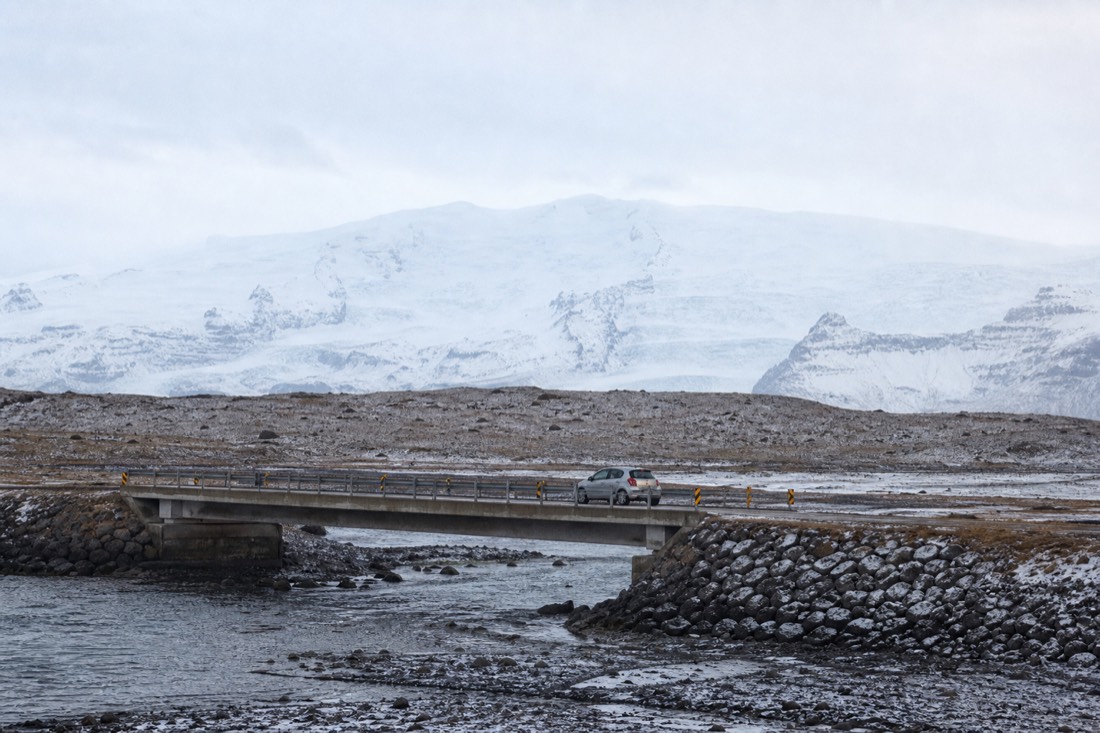
The thing summer drivers underestimate is how quickly the coast changes its mind. A stretch that was bare tarmac at 9am can glaze over by early afternoon as the temperature drops a degree, and black ice does not announce itself. Crosswind is the other one. The gusts that pour off Vatnajökull hit exposed sections near the sandur with real force, and a light economy car feels them in a way a loaded coach never does. Every winter, cars on this route get pushed across a lane by a single gust.
Then there are the bridges. Several of the crossings east of Vík are single-lane, so you yield, judge the oncoming car, and commit, all of it harder on ice with a windscreen half-fogged. Add the closures. The Icelandic Road Administration can shut a section of Route 1 within hours of a storm front arriving, and if you are already two hundred kilometres east when it closes behind you, the day stops being a scenic drive and starts being a problem you solve alone.
| Winter hazard | What it does to a self-driver | How the coach absorbs it |
|---|---|---|
| Black ice | Appears without warning as temps drop, kills grip | Winter-rated tyres, a driver who reads the surface |
| Crosswind off Vatnajökull | Shoves a light car across a lane | Heavy coach, driver eases off before the gap |
| Single-lane bridges | Yield-and-commit calls on ice | Driver knows every crossing on the route |
| Sudden closures (road.is) | Reroute or turn back on your own | Operator reroutes or stands the trip down |
| Four to five hours of daylight | One leg driven in the dark on ice | Departure timed, you rest between stops |
When do I tell people flat out not to self-drive this?
When any two of these line up: it is November through March, you have never driven on ice, you are doing it solo, or the forecast is unsettled. I have guided this coast since 2022, and the travellers who scare me are not the reckless ones. They are the careful, capable drivers from mild countries who have simply never met a Route 1 crosswind in the dark.
I am Icelandic, I live with this weather, and I have taken more than a thousand international visitors along the South Coast and out to the glacier lagoon. That work has made me blunt about one thing: confidence at home does not transfer to Icelandic ice. Some of the most anxious moments I have seen came from excellent drivers who assumed a clear morning meant a clear day, then found themselves white-knuckling a dark, gusting return leg they had not planned for.
So the honest advice I give, over and over, is this. If it is deep winter and you would be driving alone, book the coach. If the person who would do the whole drive is also the only one who can, and they have never handled snow, book the coach. If you are chasing the aurora and would be tempted to keep driving tired at 9pm to catch it, definitely book the coach. None of that is a knock on anyone's driving. It is a read on what this specific road does to people who have not felt it before.
The flip side matters too, because I am not anti-self-drive. Give me a summer week, two drivers who can trade the wheel, and a forecast that holds, and I will happily point you at a rental desk. The judgment is situational, not tribal. Match the day to your honest skill, not to the version of yourself you wish showed up on ice.
What kind of car do you actually need, and is a 4x4 worth it?
In summer, an economy two-wheel-drive car at roughly $55 to $70 a day does the whole trip fine, because Route 1 to the lagoon is paved the entire way. In winter, a compact 4x4 buys you real confidence on slush and ice and steadier footing in wind, and it costs meaningfully more per day. You are paying for traction and nerve, not for reaching a road you could not otherwise reach.
This surprises people: you do not need a 4x4 to get to Jökulsárlón. The route is sealed tarmac from Reykjavík to the car park, so a small petrol hatchback handles it in good conditions, and that is the cheapest way to run the day. The distance does not change with the car, and the fuel bill, roughly 50 litres at around 217 ISK per litre, lands about the same whether you are in an economy car or a modest SUV.
Where the bigger car earns its premium is winter margin. A heavier 4x4 with proper winter tyres sits more securely on packed snow, shrugs off crosswind better than a light car, and gives a nervous driver more room for error. It is not magic, ice still wins arguments, but the gap in confidence is real. The trade is money, since a 4x4 or studded-tyre SUV runs well above the economy rate, and thirst, since the larger vehicle drinks a little more of that expensive fuel.
| Car type | When it works | The trade-off |
|---|---|---|
| Economy 2WD (~$55–70/day) | Summer, dry paved Route 1, a confident driver | Low clearance, light and skittish in crosswind |
| Compact 4x4 / SUV | Winter confidence, ice, slush, wind | Costs well above the economy rate, thirstier |
| Camper or larger van | Overnight break near Höfn, own pace | Heaviest in wind, hardest to park, most fuel |
Where does self-driving break even by group size?
Around two to three people. The car costs the same total no matter how many sit in it, so the per-head number falls with every passenger. Run alone, the roughly $170 to $230 for the whole day lands entirely on you and a coach seat almost always wins. Split three or four ways, self-driving slides level with or under the seat price.
The math is worth doing before you book, because "self-drive is cheaper" is only true past a certain headcount. Take the honest all-in figure for the car for one day trip, the $170 to $230 that covers rental, fuel, insurance top-ups, and the 1,110 ISK to park at the lagoon, then divide it by how many bodies are in the car against the live coach seat price on the day.
| Group in the car | Car cost split ($170–230 total) | Versus one coach seat |
|---|---|---|
| Solo | $170–230, all on you | Seat almost always cheaper |
| Two | ~$85–115 each | Usually still above a seat |
| Three | ~$57–77 each | Roughly level, depends on the live price |
| Four | ~$43–58 each | Can slide under four seats |
Two caveats keep this honest. First, the seat price on GetYourGuide moves with season and demand, so the crossover shifts a little either way, which is why the table talks in ranges rather than a single winning number. Second, cost is only one column of the decision. A group of four might still choose the coach so nobody loses ten hours to the wheel, and a solo photographer might pay the solo premium gladly to control the light. Price sets the floor of the argument, not the whole of it.
What should you sort out before you drive it yourself?
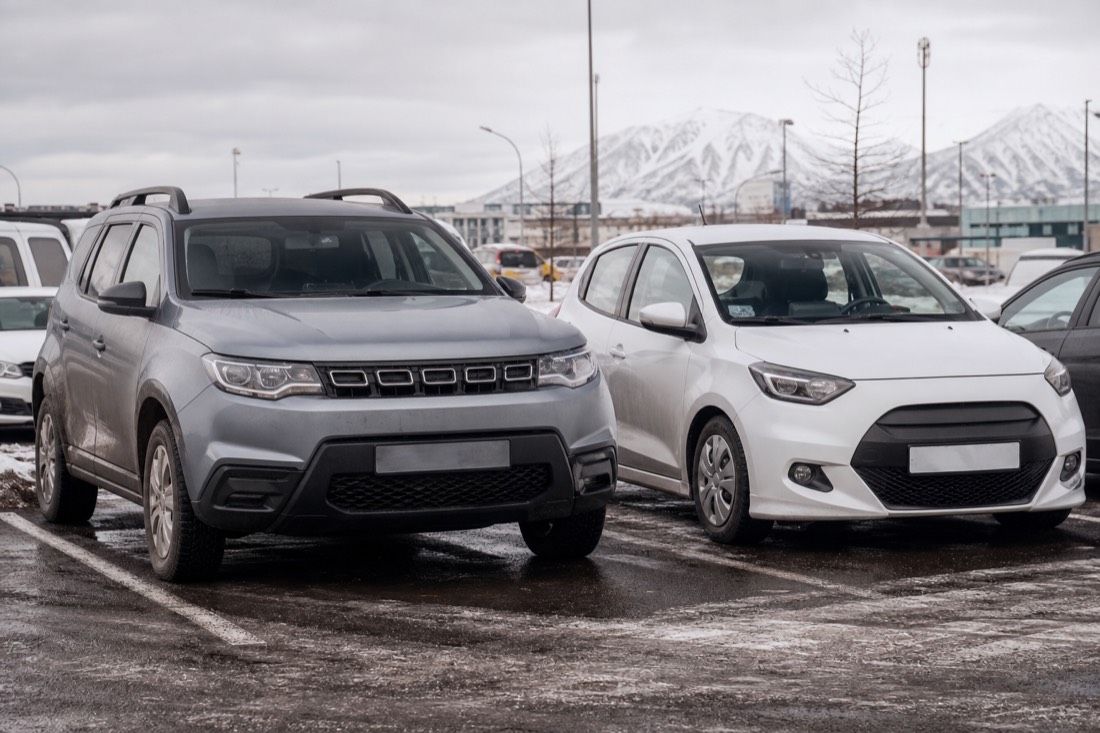
Five things, none optional: your licence and any required international permit, the right insurance add-ons, a full tank before the empty eastern stretch, a morning check of road.is and safetravel.is, and 1,110 ISK ready for lagoon parking. Sort those and the drive is mostly enjoyable. Skip one and it is the thing that bites you at hour six.
Treat the list below as a planning allowance rather than a rulebook, since exact requirements depend on your home licence and your rental contract, and the rental desk confirms the specifics. The point is to front-load the boring decisions in Reykjavík, where fixing them is easy, instead of discovering a gap somewhere past Vík where it is not.
| Before you drive | Why it matters on this route |
|---|---|
| Valid licence, plus an international permit if your country needs one | Rentals and police both check it; sort it before you land |
| CDW with sand-and-ash and gravel cover | Storms off the black sand near Vík really do blast grit at paintwork |
| A full tank leaving the South Coast | Stations thin out east of Vík, and running low is a real risk |
| road.is and safetravel.is checked that morning | Closures and warnings post within hours, not days |
| 1,110 ISK ready to park at the lagoon | There is no free lot; the fee is valid all day with re-entry |
| Warm layers and grippy footwear for the ice | Diamond Beach is exposed, and the black sand near the water is slick |
Fuel deserves one extra line, because it is the mistake I see most. The eastern half of this drive is thinly served, so leaving Reykjavík or Vík on a full tank is not caution, it is planning. At roughly 217 ISK per litre you will feel the fill, but a car coasting on fumes on a dark, empty stretch of Route 1 in January is a far more expensive kind of problem. That single habit, top up while you can, removes most of the anxiety people carry about the distance.
What if you want the best of both?
Split the difference with an overnight. Drive out at your own pace, sleep near Höfn about 80 km east of the lagoon, and you get self-drive flexibility without cramming 760 km of driving into one exhausting day. It costs a night's lodging but removes the single biggest downside of the self-drive day trip, which is the sheer length of it.
This is the option I quietly recommend to nervous winter drivers who still want their own car. Breaking the distance in two turns a punishing marathon into two relaxed days, gives you a proper morning or evening at the ice when the tour buses have gone, and takes the daylight pressure off the drive. The trade is money and time: you are paying for a room and giving up a day, which not every itinerary has room for. I map out the lodging around the lagoon in where to stay near Jökulsárlón, and the full logistics of the journey, distance, drive time, and the three ways to get there, sit in how to get to Jökulsárlón from Reykjavík.
Whichever way you lean, respect the distance that started this whole decision. Three hundred and eighty kilometres each way is not a footnote, it is the trip. Price it honestly, read the season, and be truthful about how you feel behind the wheel. Get that right and the ice at the end rewards every choice you made to reach it.
Your Next Step
Choose your Jökulsárlón transport plan
Initial editorial suggestion. Confirm your date and party requirements with the operator.
Have your travel date and party details ready? Check the 14-hour Reykjavík coach before committing to a rental and the 760 km drive.
Ages 6+. Allow for delays. Meals are extra; glacier hiking and ice-cave visits are separate experiences.
Refine Your Choice And View Alternatives
Reykjavik: Jokulsarlon Glacier Lagoon & Diamond Beach Tour
14-hour coach trip from Reykjavík with an English-speaking guide, Jökulsárlón and Diamond Beach stops. Pickup and the seasonal boat ride depend on the booked option.
This tool compares tour formats, meeting points, listed ages, seasonal windows and duration. Seasonal guidance is not live availability. It does not confirm availability or personal suitability. Local activities do not include the drive from Reykjavík; leave extra time for travel and check-in.
South Coast & Glacier Lagoon Private Tour (Up to 8 Pax): A 15-hour private guided trip from Reykjavík with Reynisfjara, Diamond Beach and Jökulsárlón on the listed route. A long day with private group pricing. Confirm party size, children, pickup and optional boat costs. Not suitable for wheelchair users.
Reykjavík: 2-Day Tour with Icebergs, Glaciers & Waterfalls: Two days from Reykjavík with an English-speaking guide, one ensuite overnight stay and breakfast; visits the South Coast and Jökulsárlón. Ages 10+. Requires two full days; lunch and dinner extra. Glacier hike and boat cruise depend on the option you book. Not wheelchair accessible. Overnight lodging is operator-selected; a specific lagoon-side hotel or dawn visit is not promised.