How Much a Jökulsárlón Day Trip Really Costs in 2026
An Icelandic guide's honest money breakdown of a Jökulsárlón and Diamond Beach day trip: free entry, parking, fuel, food out east, the boat, and realistic totals.
 By Björn Einarsson, Iceland South Coast & glacier-lagoon tour guide and local specialist
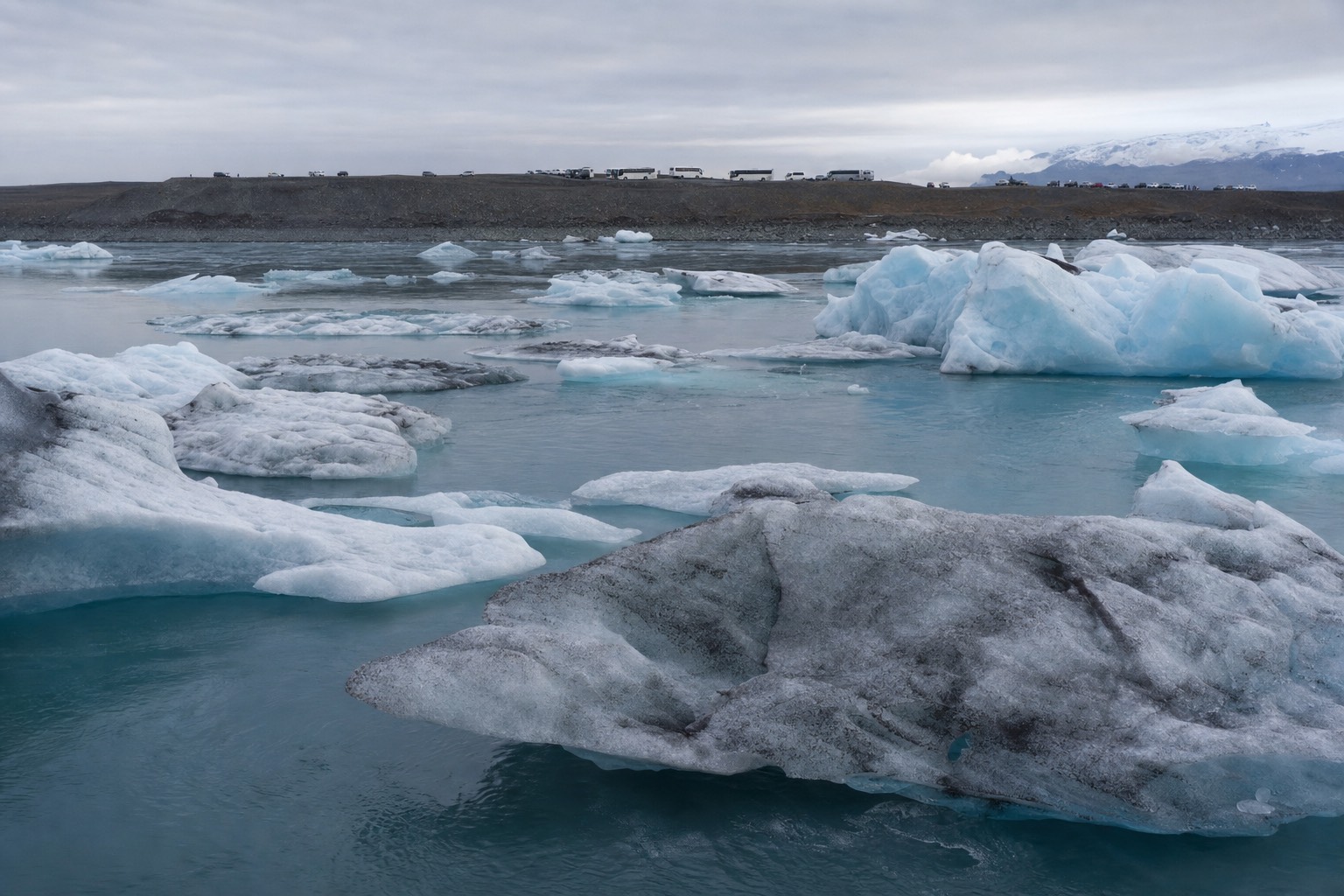
Nobody charges you to stand at the edge of the glacier lagoon and watch a berg the size of a truck drift by. That part is free, and people are always surprised to hear it. Then the day quietly bills you anyway: the parking machine, the fuel gauge dropping across 760 kilometres of Route 1, the langoustine dinner in Höfn that costs more than you paid for two nights of camping. I have driven visitors out to Jökulsárlón for years and watched the same budget shock land at the same three moments. So let me lay the real numbers on the table, in króna, the way I would if you were planning this over coffee.
A quick honesty note before the figures. Prices here move with the season and the day's exchange rate, and Iceland reshuffled its fuel taxes in early 2026, which knocked petrol down noticeably. Everything below is current as I write, sourced from live pricing, not guesswork. Treat it as recent rather than carved in stone.
Is Jökulsárlón free to visit, or is there an entry fee?
Entry to Jökulsárlón and Diamond Beach is completely free. There is no ticket gate and no admission charge for the lagoon or the beach. The only unavoidable on-site cost is parking, currently 1,110 ISK for a standard passenger car, and that single fee covers both the lagoon car park and Diamond Beach across the road.
This trips people up constantly, in both directions. Some arrive braced for an expensive attraction ticket that does not exist. Others assume the whole day is free and get caught out by the parking machine, because for years there was no fee at all. The charge is a regional park levy, and you can see it listed on the official Vatnajökull National Park price list. Pay it once and your slip is valid until midnight, so the walk over to the black sand does not cost extra.
What you actually pay for is getting there and feeding yourself along the way. That is where a Jökulsárlón day trip turns from free attraction into a real line of expenses, and it is worth seeing them itemised before you commit a rental car to the run.
How much does a self-drive day trip to Jökulsárlón cost?
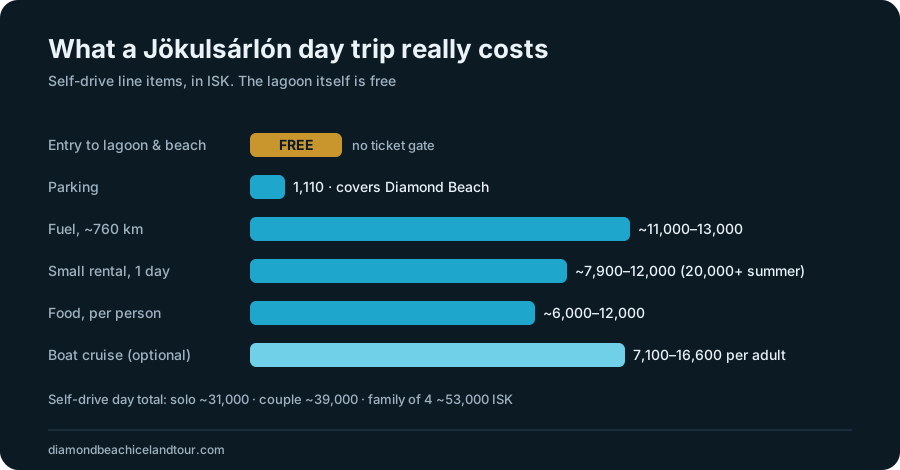
Budget roughly 30,000 to 55,000 ISK for a self-drive day depending on your group size and season. The big line items are the rental car for the day, fuel across the 760-kilometre round trip, the 1,110 ISK parking, and food, which out east is both pricey and scarce. The lagoon itself stays free; everything around it does not.
Here is the honest line-item breakdown for driving yourself. I have anchored each figure to current pricing, and flagged where the number swings with season. Fuel assumes a small petrol car sipping around seven to eight litres per hundred kilometres over the full there-and-back.
| Cost line | Realistic amount (ISK) | Notes |
|---|---|---|
| Small rental car, one day | 7,900–12,000 low season · up to 20,000+ summer | Per-day share; you will likely rent it for more than a day |
| Fuel, ~760 km round trip | ~11,000–13,000 | Petrol sits near 217 ISK per litre after the 2026 tax change |
| Jökulsárlón parking | 1,110 | Covers Diamond Beach too, valid till midnight |
| Food, per person for the day | ~6,000–12,000 | Two stops; a hot main out east is rarely cheap |
| Optional lagoon boat cruise | 7,100–16,600 per adult | Seasonal, only if you add it |
The one people underestimate is fuel. Iceland's pump prices run well above what most visitors pay at home, so a single tank for this drive is a genuine expense, not a rounding error. The rental is the other variable that can blow the budget, because a summer booking made late costs multiples of a shoulder-season one reserved early. I break the running costs down further, per person and per season, in the full cost-to-visit guide for Jökulsárlón and Diamond Beach.
Guided tour or self-drive: which works out cheaper by group size?
For a solo traveller or a couple, the guided coach is usually the better value once you add rental, fuel, parking, and the winter-driving stress into the self-drive column. For a family of four sharing one car, self-drive often edges ahead on pure cost, because the fixed car and fuel spread across four heads. The guided fare buys the drive off you; the car divides it up.
The maths turns on how many people split the fixed costs. A rental and a tank of fuel cost the same whether one person or four sit in the car, so the more heads, the cheaper self-drive looks per person. Against that, the guided coach fare is charged per seat, but it swallows the rental, the fuel, the parking, and the entire ten hours of driving in one number, with a live guide reading the landscape as you go.
| Group | Self-drive estimated total (ISK) | Guided coach |
|---|---|---|
| Solo | ~31,000 (car, fuel, parking, own food) | Per-seat fare, drive and parking already inside |
| Couple | ~39,000 total (~19,500 each) | Two seats; no car, fuel, or winter risk on you |
| Family of 4 | ~53,000 total (~13,000 each) | Four seats; food at stops still your own |
Read the self-drive figures as estimates built from the real line items above, not quotes. Notice the per-head cost falling as the group grows: that is the whole story. If you are one or two people, or nervous about Route 1 in winter, the coach is the pragmatic pick, and you can book the guided Jökulsárlón & Diamond Beach day trip and then check live availability and prices on GetYourGuide to weigh the seat fare against your own petrol math. Use the current GetYourGuide listing to compare the seat fare and available options with your own petrol calculation. For the fuller side-by-side, my self-drive versus guided tour breakdown goes deeper on the trade-offs beyond money.
What does food really cost out east, and why is it so sparse?
Food on the eastern stretch is expensive and thin on the ground. Between Vík and Höfn the options are few, they fill up fast, and many close early, so a hot meal is both a cost and a logistical problem. Höfn's famous langoustine main runs around 7,300 to 9,500 ISK, and even a bowl of soup and bread is not cheap.
This is the part of the day I warn people about hardest, because hunger out here has no easy fix. On the south coast you pass proper villages with choices. Once you swing east past Vík, the settlements thin out, and the few restaurants near the lagoon and in Höfn carry the entire flow of day-trippers and self-drivers at roughly the same lunch hour. In shoulder season some simply shut mid-afternoon.
Höfn earns its reputation as the langoustine town, and if you time it right the meal is a genuine treat, though at 7,300 to 9,500 ISK for a main it is a splurge, not a refuel. My honest advice, especially off-season: carry your own lunch. A bakery run in Reykjavík or a supermarket stop before you leave the populated coast saves both money and the risk of arriving somewhere hungry to find the kitchen closed. If you want to taste the lobster, treat it as the day's one planned indulgence rather than a casual bite. There is more on the town itself in my Höfn, the lobster town near Jökulsárlón piece.
Is the Jökulsárlón boat cruise worth the extra cost?
The optional lagoon boat cruise is a separate, seasonal cost on top of everything else. The amphibian boat runs around 7,100 ISK per adult and the smaller Zodiac around 16,600 ISK, and both operate only from roughly May to October, weather and ice permitting. It gets you out among the icebergs rather than watching from shore, which some find magical and others skip happily.
Whether it earns the money depends on what you came for. The amphibian boat is the gentler, cheaper option, a slow trundle onto the water with a guide pointing out seals and explaining the ice. The Zodiac costs more than double and moves faster and closer to the glacier face, which suits photographers and anyone chasing a bit of adrenaline. Neither runs in winter, so if you visit between November and April the decision is made for you.
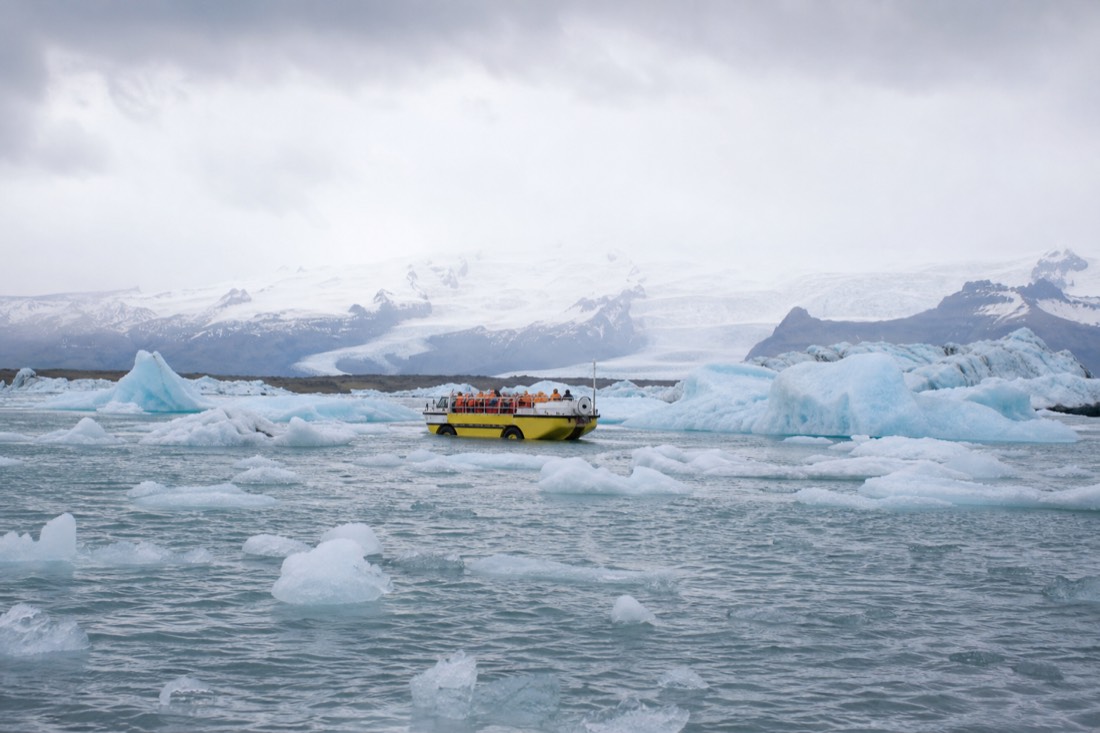
My honest read after many summers standing on that shore: the view from land is already extraordinary, so the boat is an upgrade, not a requirement. If your budget is tight, the free walk along the lagoon edge and over to Diamond Beach delivers most of the wonder. If you have the money and it is boat season, the amphibian trip is the sensible middle: on the water, among the ice, without the Zodiac's premium.
What day-trip costs do people forget to budget for?
The forgotten costs are the ones that arrive quietly: parking you assumed was free, rental insurance add-ons for gravel and sand, a second-driver fee, the optional boat, and fuel that costs far more than at home. None is huge alone, but stacked together they can add 15,000 to 25,000 ISK to a self-drive day you thought you had already priced.
These are the lines that turn a tidy budget into a receipt full of surprises. I have watched the sand-and-ash insurance conversation play out at more than one rental desk in spring, when the wind out east can strip paint off a car.
| Easy-to-forget cost | Typical amount (ISK) | Why it catches people |
|---|---|---|
| Lagoon parking | 1,110 | Many assume the free entry means free parking |
| Fuel premium over home | Petrol ~217 per litre | Pump prices run high; the long drive amplifies it |
| Rental insurance add-ons | Varies, often thousands | Gravel, sand-and-ash, and CDW reduction stack up |
| Second-driver / young-driver fee | Varies | Added at the desk, easy to overlook when booking |
| Optional boat cruise | 7,100–16,600 per adult | Tempting on the day, rarely in the original budget |
Winter brings its own hidden line: studded tyres are usually included, but confirm it, and build in the real possibility that road closures reshape or cancel your plan. The official road conditions map at road.is is the tool I check before any winter run east, and a coach with a local driver removes that whole worry, along with the insurance gamble.
So how much should you actually budget for a Jökulsárlón day?
Plan roughly 30,000 ISK for a self-driving solo traveller, around 39,000 for a couple sharing a car, and about 53,000 for a family of four, before any boat cruise. A guided coach replaces the car, fuel, and parking with one per-seat fare, which usually wins for one or two people and closes the gap for larger groups. Add 7,100 to 16,600 ISK per adult if you want the boat.
The pattern across every trip I have priced is the same. The lagoon is free, the getting-there is not, and food is the sneaky line that people forget to count. If you are driving, book the car and reserve it early, carry your own lunch, keep 1,110 ISK ready for parking, and decide about the boat before you go so it is a choice and not an impulse. If you would rather not chase receipts across a fourteen-hour day, the guided coach turns the whole thing into a single number and lets someone else buy the fuel.
Either way, keep some perspective on the biggest cost of all, which is not money. It is the ten hours in transit for ninety minutes at the ice. I weigh that trade in full in whether the long day to Jökulsárlón is worth it. Spend a little wisely, skip what you do not need, and the day pays you back in front of a glacier that has been melting toward the sea for longer than anyone has been counting króna.
Your Next Step
Calculate your self-drive cost per person
Initial editorial suggestion. Confirm your date and party requirements with the operator.
Have your group size, traveller ages and date in mind? Calculate your self-drive cost per person first. If everyone is at least 6, check the guided fare before committing to the car, especially when avoiding the long drive matters more than the lowest total.
Ages 6+. Allow for delays. Meals are extra; glacier hiking and ice-cave visits are separate experiences.
Refine Your Choice And View Alternatives
Reykjavik: Jokulsarlon Glacier Lagoon & Diamond Beach Tour
14-hour coach trip from Reykjavík with an English-speaking guide, Jökulsárlón and Diamond Beach stops. Pickup and the seasonal boat ride depend on the booked option.
This tool compares tour formats, meeting points, listed ages, seasonal windows and duration. Seasonal guidance is not live availability. It does not confirm availability or personal suitability. Local activities do not include the drive from Reykjavík; leave extra time for travel and check-in.