Inside a Vatnajökull Crystal Ice Cave: What It's Really Like
An Icelandic guide's first-person account of stepping inside a natural blue ice cave under Vatnajökull: the light, the sounds, the crampons, and the honest caveats.
 By Björn Einarsson, Iceland South Coast & glacier-lagoon tour guide and local specialist
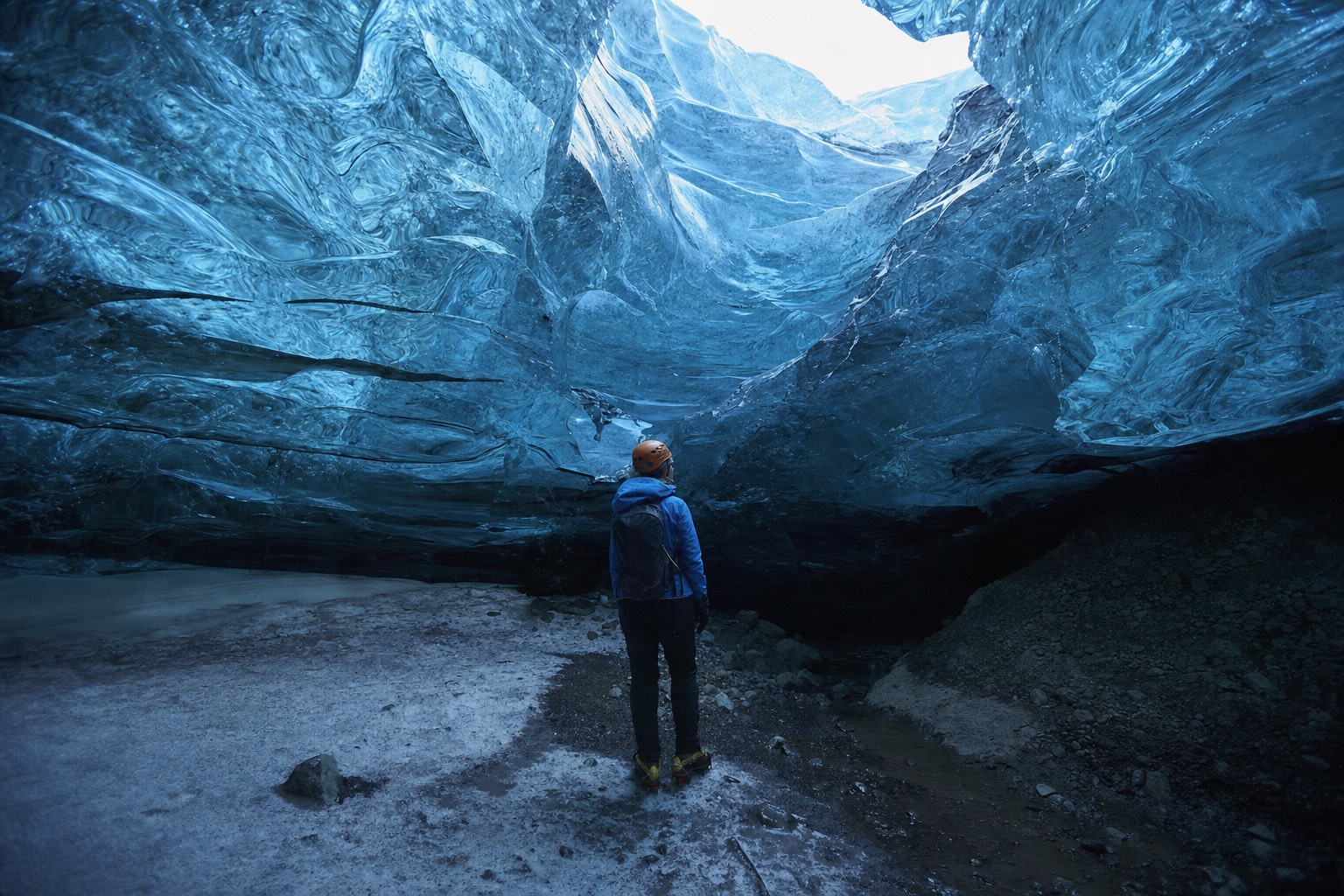
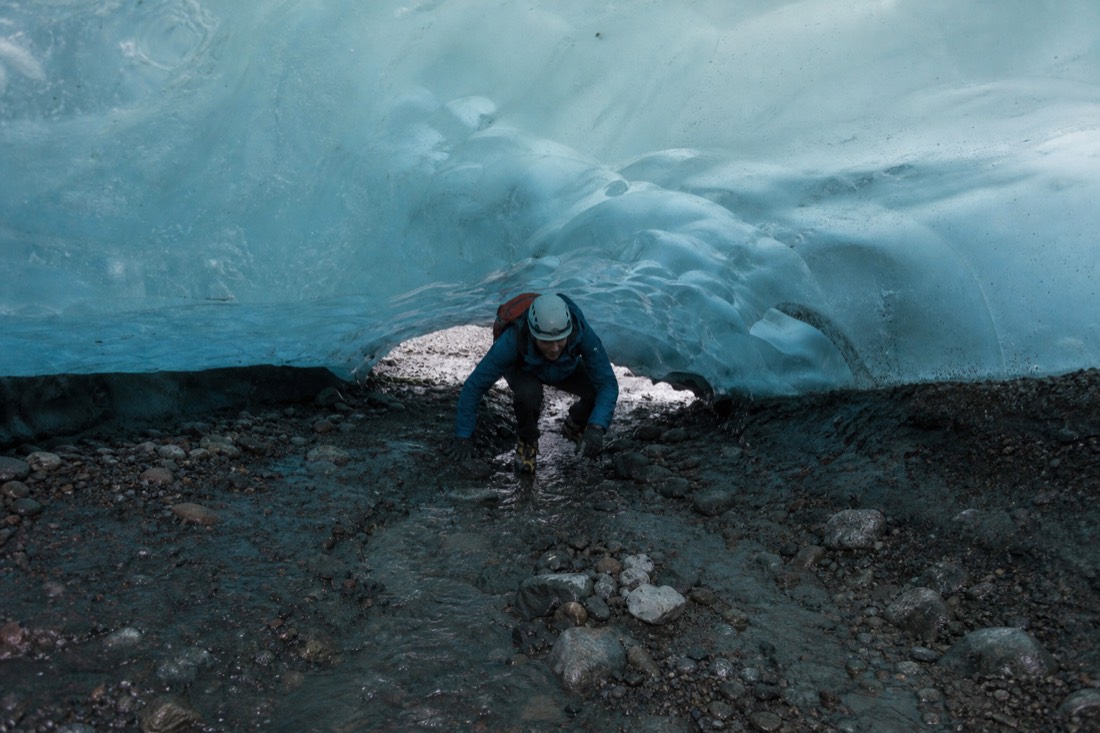
The first thing that gets you is the colour, and the second is the quiet. You crouch through a low mouth of ice, your crampons biting into a floor that was a river only months ago, and then you stand up into a room that is glowing. Not lit. Glowing, from the inside, a blue so saturated it looks switched on. I have taken people onto and around these glaciers for years, and I still stop talking for a second every time. The cave you are standing in did not exist last winter, and it will not exist next winter. That is the strange, humbling fact at the heart of the whole thing.
Let me walk you through what it is actually like, because the photographs oversell the ease and undersell the awe.
What is it actually like inside a Vatnajökull ice cave?
Cold, blue, and louder than you expect. You wear crampons and a helmet, follow a certified guide over uneven ice, and stand inside a chamber that glows deep blue where the ice is thickest. Water drips, the glacier creaks, and the space is often smaller and lower than the wide-angle photos suggest.
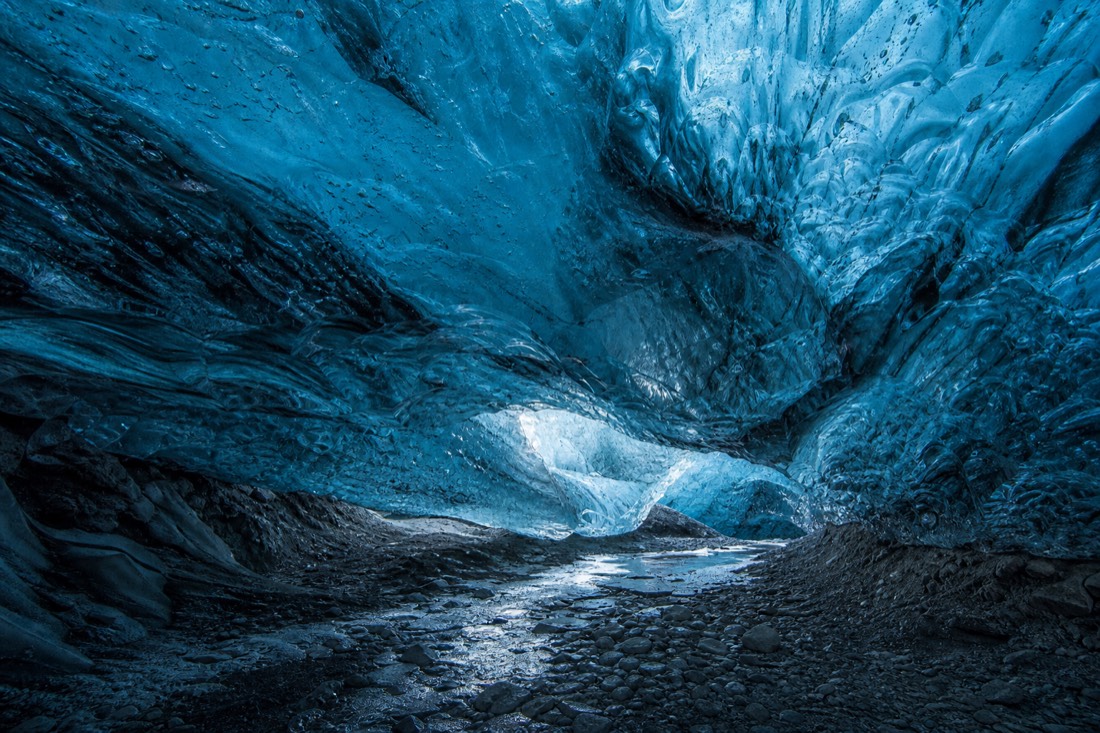
The scale surprises everyone. Some caves open into a hall you could park a bus in; others are a crouching squeeze that widens into one perfect glowing pocket. You do not choose which, the winter does. Where meltwater carved this season decides the shape, so the guide who scouted it in autumn is really showing you a room the glacier built by accident.
Sound is the part no one warns you about. A living glacier is not silent. It ticks and groans as the ice shifts under its own weight, and in a thaw you hear water moving somewhere you cannot see. None of it is cause for alarm when you are with a trained guide, but it does remind you, viscerally, that you are standing inside a moving thing.
| What you notice | The reality inside |
|---|---|
| Light | Deep electric blue where ice is densest, grey-white near thin walls and the entrance |
| Sound | Dripping water, occasional deep creaks and cracks as the glacier moves |
| Footing | Hard, uneven, sometimes wet ice; crampons essential, hands sometimes needed |
| Air | Around or just below freezing; damp cold that finds any gap in your layers |
| Ceiling | Varies wildly, from cathedral-high to a stoop; helmets are not decoration |
| Time inside | Usually short, often 20 to 40 minutes in the cave itself within a longer glacier outing |
Why does the ice inside the cave glow blue?
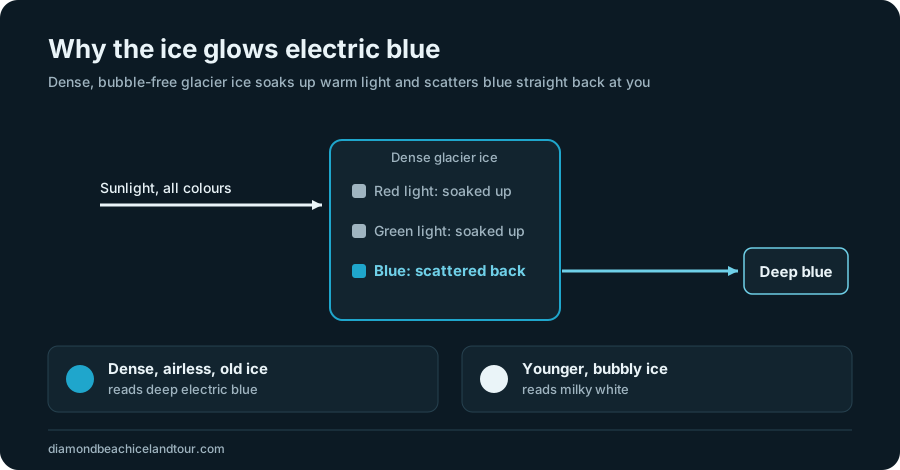
The blue is real, not a filter. Glacier ice at the base of Vatnajökull is so old, so compressed and so free of trapped air bubbles that it absorbs almost every colour of light except blue, which it scatters back at you. Thicker, denser, bubble-free ice reads as the most intense electric blue.
Younger ice, or ice full of tiny air pockets, looks white or milky because those bubbles scatter all wavelengths equally. The ice in a deep cave has had the air squeezed out of it under centuries of glacier weight, and that is exactly why the colour turns so vivid. On a bright day the blue almost pulses; under heavy cloud it goes moodier, more grey-teal.
You will also see dark stripes in some walls. Those are volcanic ash layers, pressed into the ice from eruptions long past, a geological calendar you can read with your hand. It is the closest thing to time travel this country offers, and it sits about 80 kilometres from the nearest town.
When can you go into an ice cave, and why does it change every year?
Natural ice caves under Vatnajökull are a winter-only experience, roughly November through March. They open when autumn cold stops the meltwater and stabilises the ice, and they close in spring when rising temperatures make the ceilings prone to collapse. Because the glacier reshapes them every season, no two winters give you the same cave.
Here is the part that trips people up. These are not permanent attractions. Each autumn, when the summer melt stops flowing through the glacier, professional guides go out scouting for chambers that are big enough and safe enough to enter that coming season. Once temperatures climb back above freezing in spring, the same ceilings that felt solid start to weaken, and the caves are closed. Iceland's official park guidance on Vatnajökull and its melting ice is a sober reminder that this is a shrinking, shifting glacier, not a fixed set of tunnels.
That impermanence is worth setting expectations around. A walk-in blue cave is never guaranteed on any single day; some winters produce spectacular halls, others produce little more than a low crawl, and a warm spell can shut access at short notice. If you are trying to line up the timing, I go deeper into the window in ice cave season and the best months, and into whether it lives up to the hype in is the ice cave in Iceland worth it. When you have your dates, check availability and price for the Vatnajökull ice cave tour here, the long-running trip that runs from the lagoon side.
What should you wear and bring for an ice cave tour?
Dress for a wet, sub-zero glacier, not a photo shoot. Warm waterproof layers, a hat and gloves, and sturdy ankle-supporting hiking boots that crampons can strap onto are the non-negotiables. The tour provides the helmet and crampons. Skip long dresses and smooth-soled trainers; the ice is hard, wet, and unforgiving.
The single most common mistake I see is footwear. Crampons need a firm boot with a defined heel and toe to grip, and they simply will not hold on a soft sneaker or a fashion boot. If your boots are wrong, a good operator turns you away, because a slip on cave ice is not a small thing.
Layer for damp cold rather than dry cold. The air down there sits around freezing, and the moisture makes it bite. A waterproof shell matters because you will brush against wet walls and, in a thaw, catch drips from the ceiling. Bring a headlamp if you have one, and a camera you can operate with gloves on.
| Item | Why it matters | Provided or bring |
|---|---|---|
| Sturdy hiking boots | Crampons only grip a firm, ankle-supporting boot | Bring |
| Helmet | Low ceilings and hard ice overhead | Provided |
| Crampons | Traction on wet, uneven cave ice | Provided |
| Waterproof shell + warm layers | Damp sub-zero air, dripping ceilings | Bring |
| Hat and gloves | Exposed skin loses heat fast in the cave | Bring |
| Headlamp | Handy in darker chambers and on the approach | Bring if you have one |
Is a natural crystal cave the same as a man-made ice tunnel?
No, and the difference matters. A natural crystal cave under Vatnajökull is carved by meltwater, seasonal, weather-dependent, and never guaranteed, but it delivers that raw electric-blue glow. A man-made ice tunnel, drilled into Langjökull, runs year-round, but it is engineered rather than wild and is not suitable for people with mobility impairments.
Both are worth doing; they answer different questions. If you want reliability, a fixed schedule, and easy footing, the man-made tunnel wins, and it runs in summer when the natural caves have melted shut. If you want the untamed thing, the cave the glacier made this year and will unmake by spring, you accept the uncertainty of the natural option. There is also a third character, the black-and-blue Katla ice cave under Mýrdalsjökull, which runs closer to year-round but looks quite different. I compare the styles in which ice cave tour is best in Iceland.
| Natural crystal cave (Vatnajökull) | Man-made ice tunnel (Langjökull) | |
|---|---|---|
| How it forms | Meltwater carves it; the glacier reshapes it yearly | Drilled and engineered into the ice cap |
| Season | Roughly November to March only | Year-round |
| Guaranteed? | No, conditions and safety decide daily | Yes, a fixed attraction |
| The blue | Most intense, natural electric blue | Present but softer, partly lit |
| Footing | Wild, wet, uneven; crampons essential | Levelled, walkable paths |
Is the ice cave part of the glacier lagoon day trip?
No. The natural ice cave is a separate, certified-guide winter tour, and it is not the same product as the popular full-day lagoon and beach coach trip. That day trip views Jökulsárlón and Diamond Beach from the surface; it does not go onto the glacier or into a cave. Keep the two clearly apart when you plan.
This is the honesty I owe you before you book anything. Ice caving means walking on a glacier with specialist gear, and Iceland's safety authorities are blunt about it: you enter only with a certified glacier guide and the right equipment, never alone, because the danger is real. The official advice at safetravel.is exists precisely because people underestimate glacier ice. The season guidance from Vatnajökull National Park says the same in plainer words: always go with a guide who knows the glacier from the inside out.
So if your trip falls outside the ice-cave window, or you simply want to see this coast without entering the glacier, the glacier lagoon day trip is a separate surface-based alternative. You can book the guided Jökulsárlón & Diamond Beach day trip and check live availability and prices on GetYourGuide to see which winter dates are open. The itinerary includes Jökulsárlón, Diamond Beach, Vík and Seljalandsfoss without adding a glacier hike or ice-cave visit.
So what is it really like, honestly?
Unforgettable, uncomfortable, and worth it if the conditions line up. You will be cold, the footing is awkward, and there is no guarantee of a picture-perfect chamber on your particular day. But standing inside centuries-old blue ice, listening to the glacier move around you, is one of very few things in Iceland that outdoes its own photographs.
I have stood in caves that looked like the inside of a sapphire and in ones that were frankly a bit murky and small, and here is the truth: even the modest ones stop you cold, because you are inside a living glacier that will erase this room by summer. That transience is the whole point. Vatnajökull holds Europe's largest volume of glacier ice, and it has already lost more than a tenth of that volume in a century. The cave you visit is a snapshot of something that is quietly disappearing.
Go in the right season, wear the right boots, respect the guide, and treat the blue as a gift rather than a guarantee. Do that, and the ice gives you a memory that the lagoon, for all its beauty, cannot. One is the glacier from the outside. The other is the glacier letting you in.
Your Next Step
Choose by month, age and starting point
Initial editorial suggestion. Confirm your date and party requirements with the operator.
Have a travel date in mind? Check the Jökulsárlón departure before arranging the rest of your glacier day, then confirm the route, walking demands and safe blue-ice feature offered for that date.
Ages 10+. A cave is not guaranteed: the route may visit a blue-ice canyon, tunnel or other feature. Requires general fitness and uneven-ground walking; not suitable for mobility impairments.
Refine Your Choice And View Alternatives
Jökulsárlón: The Original Ice Cave Tour on Vatnajökull
Around 2.5–4 hours from Jökulsárlón, with an English-speaking glacier guide, modified 4x4 transport and safety equipment.
This tool compares tour formats, meeting points, listed ages, seasonal windows and duration. Seasonal guidance is not live availability. It does not confirm availability or personal suitability. Local activities do not include the drive from Reykjavík; leave extra time for travel and check-in.
From Húsafell: Into the Glacier Ice Cave Adventure: A guided trip from Húsafell into the engineered Langjökull ice tunnel, with glacier truck transport and supplied equipment. A man-made tunnel, not a natural cave. All ages with an adult; not suitable for mobility impairments. Confirm departure duration and guide language for your option.
From Vik: Katla Ice Cave and Super Jeep Tour: A Super Jeep outing from Vík with a guided Katla cave visit, crampons and helmet. Select the Vík departure option. Ages 6+. Cave appearance changes. Confirm the chosen option’s duration and language before booking; Reykjavík departures are a different option.