Jökulsárlón in Every Season: Summer Icebergs to Winter Aurora
An Icelandic guide walks the glacier lagoon through all four seasons: midnight-sun boat cruises, quiet autumn colour, winter aurora and ice caves, spring thaw.
 By Björn Einarsson, Iceland South Coast & glacier-lagoon tour guide and local specialist
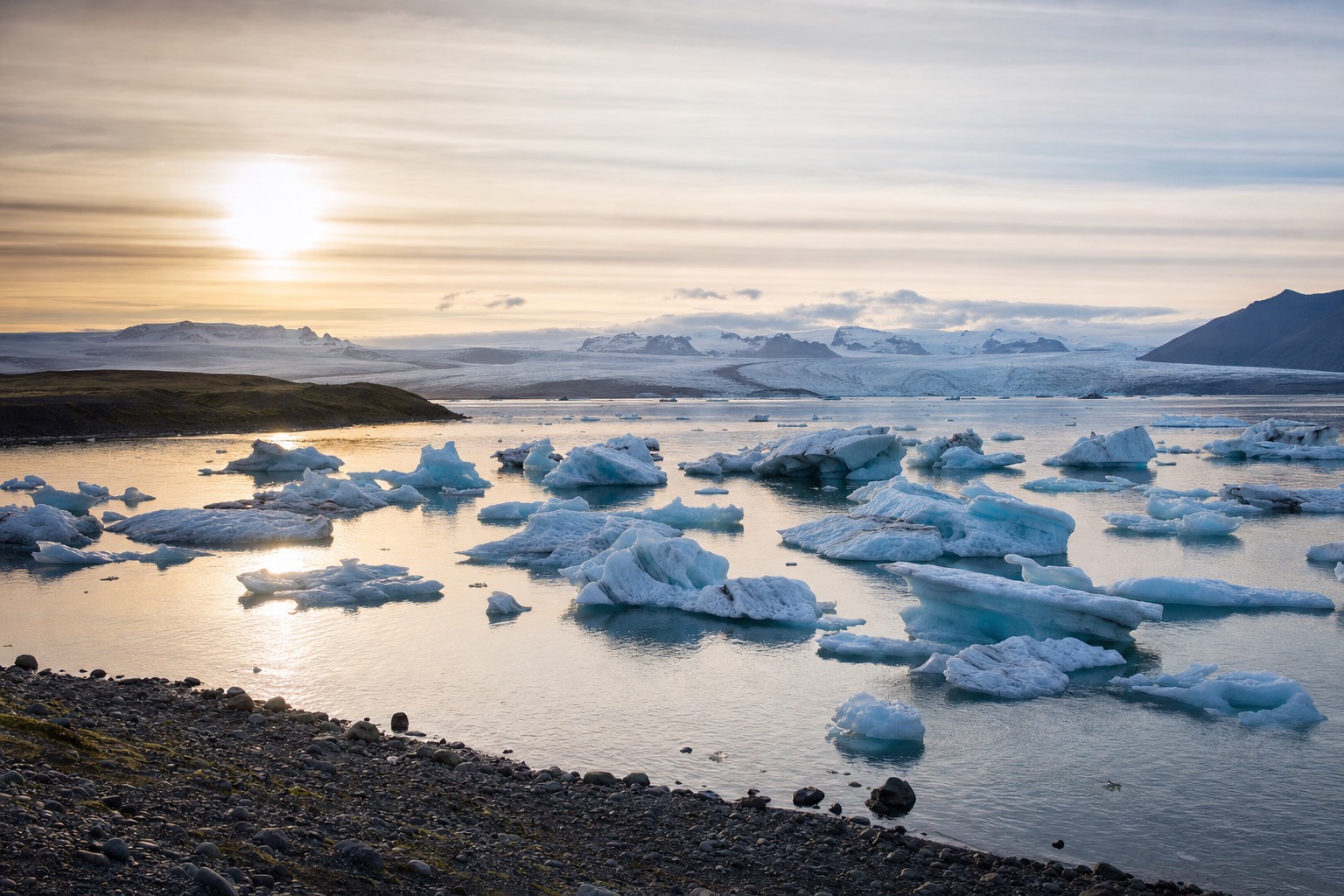
I have stood on the shore of this lagoon in a July midnight with the sun still up, and I have stood on the same black sand in January while an aurora unrolled over the ice. It is the same water, the same glacier feeding it, the same 380 kilometres of Route 1 between it and Reykjavík. Yet the place hardly feels like itself from one season to the next. People ask me when the "best" time to come is, and my honest answer is a question back: what do you actually want to see? Because the year hands you very different versions of Jökulsárlón, and the long day out east pays off differently in each.
Let me walk you through the whole calendar the way I would on the coach, season by season, with the tradeoffs left in.
How does the glacier lagoon change through the year?
The lagoon shifts on two axes: light and ice. Summer brings near-endless daylight, green surrounds, and boat cruises on open water; winter brings four to five hours of daylight, aurora after dark, and access to natural ice caves. Autumn and spring sit between, quieter and more changeable. The icebergs themselves are there year-round.
The thing to hold onto is that the ice never leaves. Breiðamerkurjökull, the glacier tongue feeding the lagoon, keeps calving bergs into the water in every month, and they keep drifting out to sea and washing back onto the black sand of Breiðamerkursandur, the beach most people call Diamond Beach. What changes around that constant is everything else: how long the sun stays up, what colour the land is, whether a boat can reach the ice, and whether the sky performs after dark.
Here is the year at a glance, the way I frame it for people trying to time their trip.
| Season | Daylight | What the lagoon gives you | Boat cruise | Ice caves | Aurora chance | Crowds |
|---|---|---|---|---|---|---|
| Summer (Jun–Aug) | ~18–21 h | Green surrounds, open water, warmest light | Yes (Apr–Oct) | No | No | Highest |
| Autumn (Sep–Oct) | ~10–13 h | Muted colour, first dark skies | Tail end | No | Returning | Easing |
| Winter (Nov–Mar) | ~4–7 h | Stark blue ice, snow, low sun | No | Yes (Nov–Mar) | Best | Lowest |
| Spring (Apr–May) | ~14–19 h | Thaw, meltwater, lengthening days | Starting | Closing | Fading | Building |
What is summer at Jökulsárlón like?
Summer is the lagoon at its most generous with time. Around the June solstice south Iceland gets roughly 21 hours of usable daylight, so a 14-hour day trip never runs out of light. The surrounds turn green, temperatures sit around 10 to 15°C, and the optional lagoon boat cruise runs, weather permitting.
This is the season most first-timers picture, and for good reason. The midnight sun means the drive out and back both happen in daylight, which takes the edge off the long transit and lets you actually see the south coast you are crossing. Rather than racing failing light, you get soft, low sun that never quite sets in June, the "white nights" that stretch from May into July. On the coach I watch people give up on sleep entirely because the window keeps showing them another glacier tongue.
Summer is also the only reliable window for getting onto the water. The amphibian and Zodiac boat cruises operate roughly May through October, and gliding out among bergs the size of small buildings is a different thing entirely from watching them from shore. If that is a priority for you, I break down whether it earns its price in icebergs, seals, and ancient ice at Jökulsárlón. The catch is company: July and August are peak, the car parks fill, and your 90 minutes on the ground are shared with a lot of other people.
Is autumn worth it at the glacier lagoon?
Autumn is the quiet bargain. September and October keep 10 to 13 hours of daylight, enough for the full day trip, while the summer crowds thin out and the dark returns far enough that the aurora becomes a real possibility on the drive home. The land takes on muted browns and golds. It is my favourite compromise season.
By late September the tour buses are fewer, the shoulder-season calm settles in, and you get more room to yourself on the black sand. The boat cruises are still running at the start of autumn before they wind down for the year, so early October can hand you both open water and returning darkness, a genuinely rare overlap. The light goes low and long through the afternoon, which is the light photographers actually want on the ice.
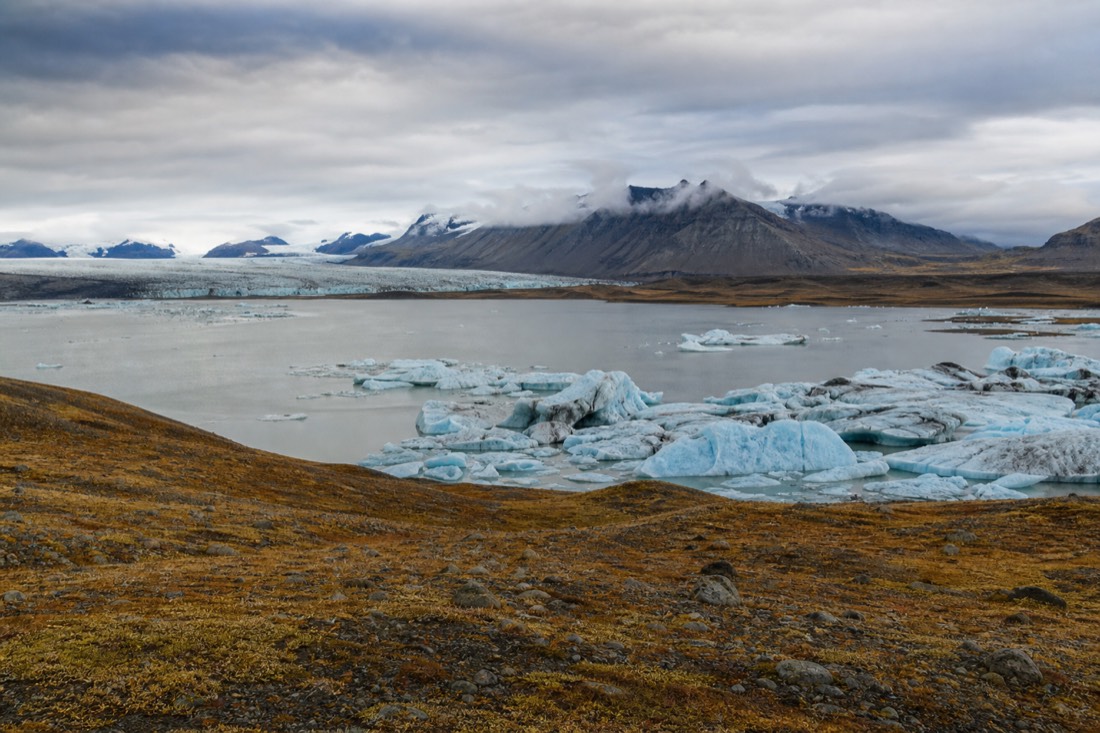
The tradeoff is honesty about weather. Autumn in Iceland is when the first serious storms roll in off the Atlantic, and a booked boat cruise can be cancelled at short notice for wind. I always tell people to treat the aurora and the cruise in autumn as bonuses rather than guarantees. If chasing the lights is the whole point, read my fuller take in northern lights at Jökulsárlón and Diamond Beach before you fix a date.
What is winter like at Jökulsárlón and Diamond Beach?
Winter is the most dramatic and the most demanding version of the trip. Daylight drops to roughly four to five hours around the December solstice, so part of the drive happens in the dark. In exchange you get stark blue ice against snow, the best aurora odds of the year, and the natural ice-cave season under Vatnajökull, which runs about November to March.
This is when Diamond Beach earns its name most sharply. Clear ice on black sand under a low winter sun, sometimes dusted with snow, is the image people carry home.
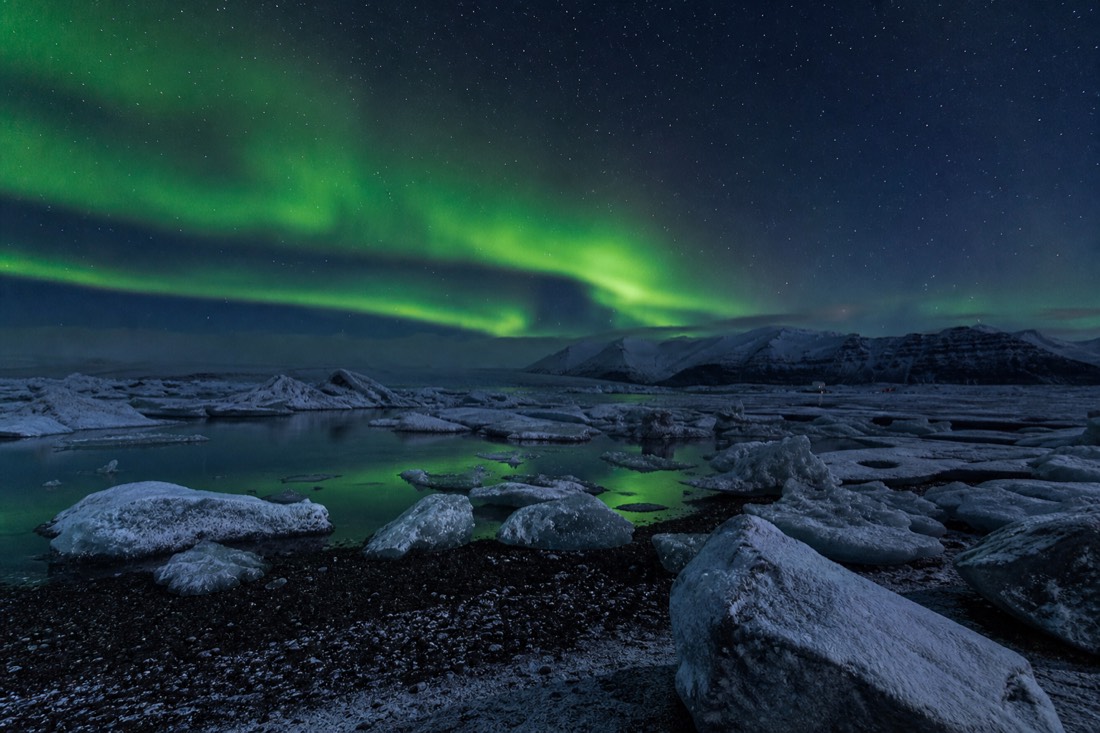 The aurora season in Iceland runs from roughly mid-August to late April and peaks in the dark months, so a winter day trip that ends after nightfall gives you a real shot at the lights on the way back, conditions allowing. The Icelandic Met Office publishes a live aurora forecast at en.vedur.is that is worth checking the night you travel.
Winter is also the only season for the natural blue ice caves that form inside the glacier. One thing I have to keep clear: the featured lagoon day trip views Jökulsárlón and Diamond Beach, it does not enter an ice cave. Those are separate, guided-only products, and a natural cave should never be entered without a certified guide. If the caves are pulling at you, start with the best months for the ice-cave season, then check dates and price for the Vatnajökull ice cave tour here.
Now the real winter tradeoff. Route 1 out east can close at short notice for wind, snow, or ice, and conditions turn fast; this is exactly why so many people hand the winter drive to someone else. A guided coach means you are not driving that stretch yourself, which in December I think matters more than any other single factor. If a season is calling you, book the guided Jökulsárlón & Diamond Beach day trip and then check live availability and prices on GetYourGuide for the dates you are eyeing. Recent ratings and review totals change, so confirm the current traveler feedback on the linked GetYourGuide listing.
What does spring bring to the lagoon?
Spring is the thaw. April and May stretch daylight back up toward 14 to 19 hours, the snow retreats, and the boat cruises begin again from around May. The aurora fades as the nights shorten, and the natural ice caves close as meltwater rises. It is a season of transition, with fewer crowds than summer but lengthening light.
I have a soft spot for late spring at the lagoon. The days are long enough that the whole trip feels unhurried again, yet the peak-season crush has not fully arrived. Meltwater from the warming glacier feeds the lagoon, and you can watch the ice reshape as the season turns. This is also a good moment to see the slower change underneath all of it: the glacier is retreating and the lagoon is growing. NASA's satellite record documents that expansion, and the Landsat time series at science.nasa.gov shows how much water now sits where solid ice stood a few decades ago.
The honest caveat for spring is that it is the least predictable stretch for activities. Early spring can still deliver a dark aurora night or a last stable ice cave, or it can hand you closed caves, no boat, and no lights, all in the same week. You are visiting a place mid-handover between winter and summer, so I tell people to come for the lagoon itself and treat the extras as luck.
How much daylight will I get each month?
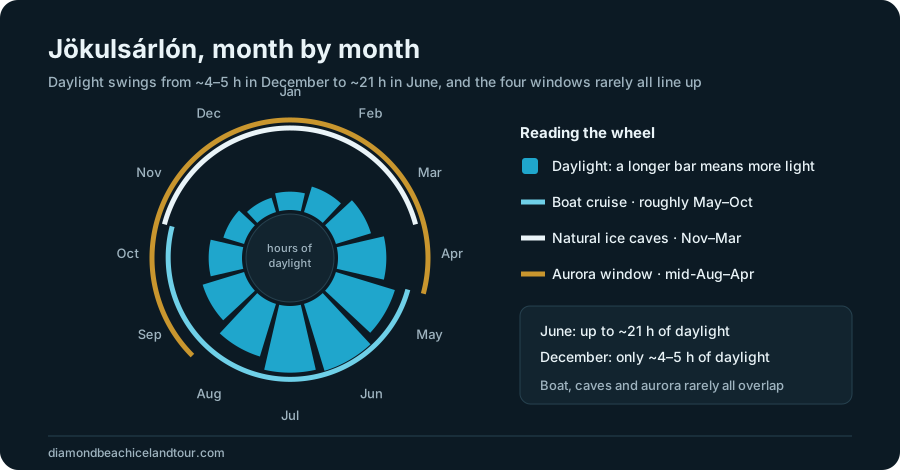
Daylight is the single biggest planning variable for a 14-hour day out east. It swings from around 4 to 5 hours in December to roughly 21 hours in June. Anything under about eight hours means part of your drive happens in darkness, which is fine on a guided coach and far more taxing behind your own wheel.
Because the trip is so long, the length of the day dictates how much of the scenery you actually see through the glass. These figures are approximate and shift a little year to year, but the shape of the curve is fixed by latitude, and this is the pattern I plan every season around.
| Month | Approx. daylight in south Iceland | What that means for the day trip |
|---|---|---|
| December | ~4–5 h | Both drives largely in the dark; peak aurora odds |
| January | ~5–6 h | Very short, stark light; ice-cave season |
| February | ~8 h | Lengthening fast; strong winter light |
| March | ~11 h | Balanced; ice caves winding down |
| April | ~14–15 h | Long days return; boat cruises begin |
| May | ~18–19 h | White nights start; green returning |
| June | ~21 h | Midnight sun; light never a limit |
| July | ~20 h | Peak crowds, endless daylight |
| August | ~16–17 h | Aurora season starts late month |
| September | ~13 h | Fewer crowds, dark returns |
| October | ~10 h | Boat cruise tail end; aurora building |
| November | ~6–7 h | Ice-cave season opens; short days |
Which season suits your trip best?
Match the season to what you came for. Long daylight and a boat cruise point to summer. Aurora and ice caves point to winter. Fewer crowds with some of both point to the shoulder months. There is no single best time, only the best fit for your one priority, since the trip is too long to chase everything in a day.
After a few hundred of these runs, I have learned that people are happiest when they pick one thing to optimise for and let the rest be a bonus. Trying to get midnight sun, a boat cruise, aurora, and an ice cave in the same visit is impossible, because those windows do not overlap. So decide what would make the drive worth it for you, then choose accordingly.
| If your priority is… | Best season | Why |
|---|---|---|
| Long daylight, relaxed pace | June–July | Up to ~21 h of light; no dark drive |
| Boat cruise on the lagoon | May–October | The only months boats run, weather permitting |
| Northern lights | September–March | Enough darkness plus peak aurora window |
| Natural ice caves | November–March | The only season caves are safely open |
| Fewer crowds | September–October, April | Shoulder calm with usable daylight |
| Stark ice and snow | December–February | Blue ice, snow, lowest, coldest light |
So, when should you go? If you want the easy version, come in summer for the light and the boat and accept the crowds. If you want the version people photograph and dream about, come in winter for the aurora and the ice and accept the short, dark, weather-bitten days. If you want a bit of both with room to breathe, come in the shoulder weeks and take your chances on the extras. Whichever you choose, the ice is out there in every month, waiting at the end of a very long road. Pick your season, and let the glacier do the rest. For a wider look at timing the trip, my best time to visit Diamond Beach guide lays the whole calendar out.
Your Next Step
Match your season, starting point and group to the right experience
Initial editorial suggestion. Confirm your date and party requirements with the operator.
Have a travel date in mind? Check the Reykjavík departure, pickup option and any seasonal boat choice before arranging the rest of your South Coast plans.
Ages 6+. Allow for delays. Meals are extra; glacier hiking and ice-cave visits are separate experiences.
Refine Your Choice And View Alternatives
Reykjavik: Jokulsarlon Glacier Lagoon & Diamond Beach Tour
14-hour coach trip from Reykjavík with an English-speaking guide, Jökulsárlón and Diamond Beach stops. Pickup and the seasonal boat ride depend on the booked option.
This tool compares tour formats, meeting points, listed ages, seasonal windows and duration. Seasonal guidance is not live availability. It does not confirm availability or personal suitability. Local activities do not include the drive from Reykjavík; leave extra time for travel and check-in.
Jökulsárlón: The Original Ice Cave Tour on Vatnajökull: Around 2.5–4 hours from Jökulsárlón, with an English-speaking glacier guide, modified 4x4 transport and safety equipment. Ages 10+. A cave is not guaranteed: the route may visit a blue-ice canyon, tunnel or other feature. Requires general fitness and uneven-ground walking; not suitable for mobility impairments.
Jökulsárlón Glacier Lagoon Kayaking Tour: A 1.5-hour guided paddle from the Jökulsárlón parking area, with a two-piece suit, sit-on-top kayak and equipment. English-speaking guide. Ages 14+, able to swim and comfortable in water. Not suitable for back or heart problems or those prone to seasickness. Arrive 20 minutes early; no Reykjavík transfer.